ACC Scientific Statement Provides Guidance For Managing PAD in Patients With Diabetes
A new ACC Scientific Statement on the management of peripheral artery disease (PAD) in adults with diabetes adds context to the 2024 ACC/AHA Lower Extremity PAD Guideline and "emphasizes a modern, evidence-based approach to care" starting with screening and advancing through treatment.
The statement, published in JACC and led by Writing Group Chair Sandeep R. Das, MD, MPH, FACC, provides specific evidence-based consensus recommendations for screening, diagnosis and management of PAD in this patient population, which is at higher risk for cardiovascular events and amputations. The authors note that screening for PAD is "reasonable" for asymptomatic adults with diabetes and other risk-enhancing factors like smoking, diabetes duration, foot complications, age (older than 65 years), etc.
Highlights include recommendations for when to use measurement of the ankle-brachial index vs. toe-brachial index in screening, and the need for smoking cessation, physical activity and healthy diets for everyone with diabetes and PAD. Daily foot inspections by the patient or caregiver, as well as a once-a-year foot evaluation by a qualified clinician are also recommended.
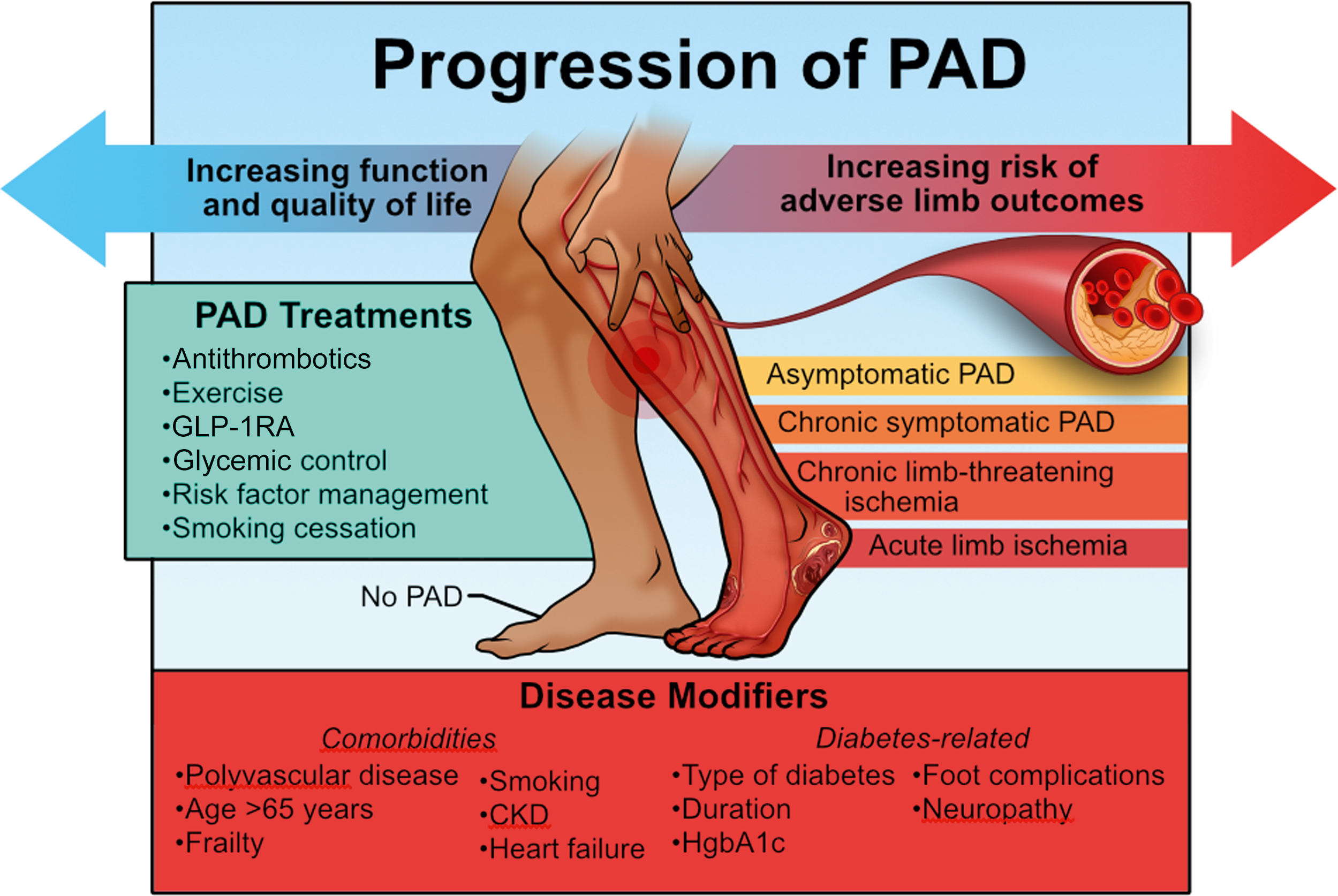
The statement highlights the "strong evidence base" for structured exercise therapy, citing its ability to improve functional status and quality of life for those with PAD. In terms of routine evaluation, the statement recommends "hemoglobin A1C testing and assessment for diabetic retinopathy, diabetic kidney disease, diabetic neuropathy, and other forms of atherosclerotic cardiovascular disease" citing "opportunities for refinement of treatment course and identification of appropriate intervals for follow up."
Specific medical management recommendations are also part of the statement, including the prioritization of SGLT2 inhibitors and GLP-1RA because of their broad cardio-kidney-metabolic benefit, as well as targets for treating LDL-C and hypertension. The authors also encourage use of rivaroxaban (2.5 mg BID) and aspirin (75-100 mg) daily to reduce major adverse cardiac and limb events in patients not at high risk for bleeding events. Evaluation by a limb salvage team prior to an amputation is also recommended, as is the use of multidisciplinary care teams as clinically indicated, including cardiology, endocrinology, podiatry, primary care, vascular medicine, and vascular surgery.
This scientific statement also outlines promising areas for future research, including use of electronic health records to support more timely diagnosis, optimal timing and methods for screening, and standardization of clinical trial endpoints. "The role of telehealth or hybrid programs also warrants further study," write the authors.
Clinical Topics: Vascular Medicine, Atherosclerotic Disease (CAD/PAD)
Keywords: Amputation, Lower Extremity, Peripheral Arterial Disease, Sodium-Glucose Transporter 2 Inhibitors
< Back to Listings


