EQUAL: Smartwatch Monitoring Improves AFib Detection
Apple smartwatch-based atrial fibrillation (AFib) screening improved detection of new-onset AFib and often identified asymptomatic and paroxysmal AFib in high-risk, older adults, according to the results of the EQUAL trial published Jan. 21 in JACC.
In the multicenter, Netherlands-based trial, 437 participants aged ≥65 years (median age, 75; 47% women; median CHA₂DS₂‑VASc score, 3.0) with elevated stroke risk and no history of AFib were randomized 1:1 to six months of smartwatch-based monitoring vs. standard care.
The intervention group wore a provided Apple Watch Series 5 or 8 for ≥12 hours a day. The watch performed continuous photoplethysmography (PPG)-based pulse irregular checks and could trigger "irregular rhythm" notifications. Patients would record 30-second electrocardiograms (ECGs) when symptoms occurred or when prompted by the watch, and all ECGs were automatically sent and reviewed by an independent eHealth team within 24 hours.
Results at six months showed that new-onset AFib was diagnosed in 21 patients (9.6%) in the intervention group vs. five patients (2.3%) in the control group (absolute risk difference, 7.3%, p=0.001; hazard ratio, 4.40). Number needed to screen was 14 – and could lead to 1.6 new AFib diagnoses per 100 patient-months.
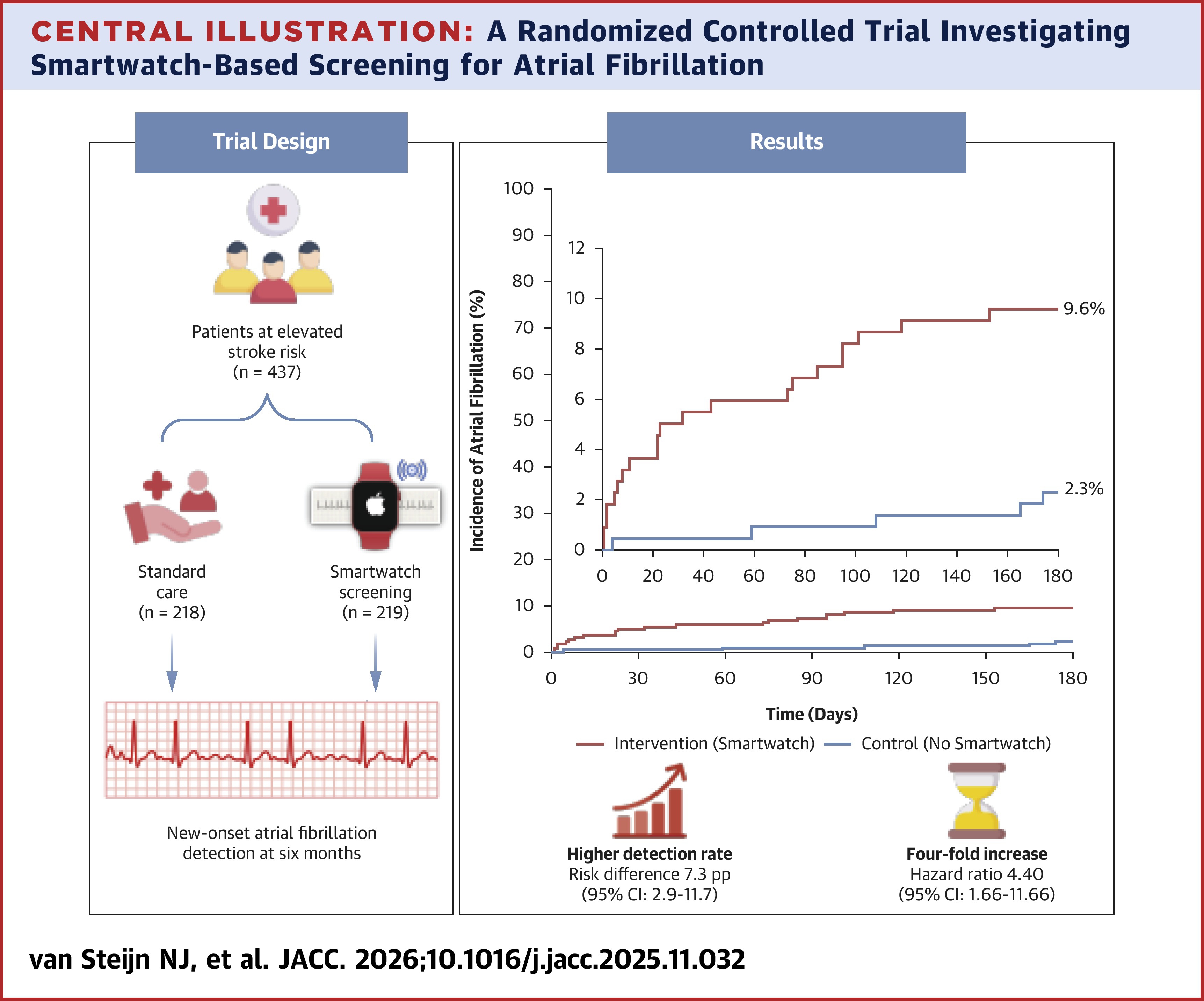
All patients in the control group experienced symptoms during their AFib episode whereas only nine (43%) of the AFib patients in the intervention group reported symptoms before diagnosis. Nineteen (19%) of the 21 AFib cases in the intervention arm were paroxysmal and 12 (57%) were asymptomatic vs. four (80%) and zero cases in the control arm, respectively.
Between intervention and control, the two groups had comparable rates of emergency department visits (5.9% vs. 8.3%) and major adverse cardiovascular events (0.9% vs. 0.9%).
"Our findings demonstrate that prolonged screening is feasible, using a workflow-integrated smartwatch-based screening method, combining PPG and single-lead ECG functions, to identify undiagnosed [AFib] in patients at highest clinical risk," write authors Nicole J. van Steijn, MD, et al. "It illustrates how consumer wearables can be embedded into telemonitoring workflows to deliver rapid, verified diagnosis and timely initiation of therapy."
The ACC recently collaborated with Apple to develop an online guide on processes, workflow and best practices for Leveraging Apple Watch For Cardiovascular Care, including educational handouts to share within your practice.
Clinical Topics: Arrhythmias and Clinical EP, Atrial Fibrillation/Supraventricular Arrhythmias
Keywords: Wearable Electronic Devices, Atrial Fibrillation, Electrocardiography, Telemedicine, Photoplethysmography
< Back to Listings


