New in Clinical Guidance | ACC: Your Trusted Source For Keeping Pace With Scientific Progress

Cardiology continues to evolve at an increasingly accelerated rate. A simple keyword search of PubMed produces more than 125,000 articles on "cardiovascular" science published in 2025. Given this evolution, timely clinical guidance that synthesizes the literature and translates new science into practical recommendations is critical to helping clinicians stay current and engage in informed decision-making with their patients.
Optimizing Clinical Guidance
The three new Clinical Practice Guidelines, developed in partnership with the AHA and in collaboration with other specialty societies and released in 2025, focused on acute coronary syndromes, high blood pressure and, most recently, adult congenital heart disease. While these guidelines are indispensable, there are times when specific guidance is needed to inform more nuanced decision-making or to address specific comorbidities or the management and treatment of specific patient populations. Other times, early guidance and best practices are necessary for informing the use of new or emerging technologies and/or treatments that do not have the corpus of necessary evidence required for a guideline.
To that end, other guidance developed by the College last year covered a wide variety of clinical topics including weight management and obesity in patients with cardiovascular disease, pericarditis, inflammation in cardiovascular disease, peripheral artery disease in patients with diabetes, and nutrition and food labeling, among others. Access the ACC's complete library of clinical guidance, including related resources, at ACC.org/Guidelines.
To meet this need, the ACC has prioritized optimizing its clinical guideline process and accelerating the pace and types of other clinical guidance over the last several years. In the last year alone, the College published a wide array of documents, including three new Clinical Practice Guidelines, one Appropriate Use Criteria document (AUC), eight Concise Clinical Guidance (CCG) reports, seven ACC Scientific Statements, one Advanced Training Statement and one new set of Clinical Performance and Quality Measures. (See Table.) It's important to note that this list does not include a host of other multisociety policy documents formally endorsed by the ACC and/or developed in partnership with ACC Member Sections.
Looking ahead, the coming year is expected to bring four new Clinical Practice Guidelines focused on acute pulmonary embolism, dyslipidemia, cardiovascular-kidney-metabolic syndrome, and primary prevention of cardiovascular disease. In addition, 17 new clinical documents are planned across a wide range of topics, including updates on heart failure with preserved ejection fraction, lipid management, and the treatment of resistant hypertension. Of course, this work will continue to unfold against the backdrop of newly released science, with the volume and velocity of new evidence showing no significant signs of slowing.
With this sheer volume of information, it is imperative that the College continues to deliver critical content in a succinct, accessible and clinically useful formats. For example, ACC.org featured more than 400 journals scans, news stories, trial summaries, and expert analyses in 2025, offering key takeaways and perspectives on practice-changing trials, emerging trends and late-breaking science from major cardiovascular meetings like ACC.25, ESC Congress 2025, AHA 2025 and TCT 2025.
Complementing this written content, ACC and JACC podcasts, on-demand webinars and the ACC Anywhere video library provided additional context and commentary, often from ACC Member Sections, to help meet the various needs of busy clinicians. We extend our sincere thanks to the more than 250 ACC members who generously volunteered their time and expertise to contribute to developing this content last year – many of whom are also gearing up to contribute to ACC.26 in New Orleans in March.
As cardiovascular science continues to accelerate, the ACC remains committed to delivering clear, trusted and clinically actionable guidance to help you stay informed and translate the latest science into better patient care. We invite you to make the College part of your daily practice – whether through ACC.org, Cardiology magazine, ACC and JACC podcasts, ACC Anywhere and/or ACC and JACC social media. Together, we can continue advancing care in a fast‑moving world.
2025 Clinical Content
| Topic | Content and Direct Links |
| ACC Clinical Documents | Clinical Practice Guidelines:
|
| Most Popular | The most popular 2025 content on ACC.org, including Journal Scans, news stories, Expert Analyses, Podcasts, Cardiology magazine features, and more. |
| Meeting Coverage | 2025 Meeting coverage in a variety of formats: |
| Podcasts | Listen to podcasts from JACC and members that provide perspectives in both shorter (5-10 minutes) and longer (20 minutes) formats. Access the library at ACC.org/Podcasts. |
This article was authored by ACC Clinical Content Editor-in-Chief Fred Kusumoto, MD, FACC. Have feedback on ACC's coverage? Share your thoughts with cardiologyeditor@acc.org.
Hot Off the Presses For 2026
New 2026 ACC/AHA Clinical Performance and Quality Measures for Patients With Peripheral Artery Disease (PAD), released in collaboration with nine other specialty societies, offer a comprehensive framework to assess and elevate PAD care across clinical settings.
"These measures will help patients, clinicians, researchers, quality assurance personnel, payers, and regulatory agencies evaluate PAD care similarly and properly focus attention toward ensuring that high-quality, high-value care is delivered to all patients," according to Writing Committee Chair Philip P. Goodney, MD, MS, and Vice Chair Elsie G. Ross, MD, MS, RPVI.
A total of 15 measures – seven performance measures and eight quality measures – are defined in the document and based on the 2024 ACC/AHA PAD Guideline. The measures span the continuum of PAD management, from initial evaluation and diagnostic testing to preventive medical therapies, lifestyle modification, procedural considerations and attention to populations at greatest risk for disparities. Read more.
Dive Deeper Into the Newest Guidelines – ACC.26 Style
Bring your toughest cases and your curiosity to ACC.26 in New Orleans. Start with Fireside Chats, intimate conversations that unpack what's new in the guidelines and why it matters in day‑to‑day practice. Then step into the Town Halls, where your questions drive the agenda – expect candid takes from guideline authors and frontline experts, plus pragmatic pearls you can use on Monday morning.
Ready to put knowledge to the test? Head to the Gameshow Room for fast‑paced, high‑yield competitions that turn guideline essentials into real‑time decisions. Buzz in for lightning rounds, team challenges, and case scenarios that sharpen clinical reasoning under pressure – bragging rights included.
Prefer a quick pivot between formats? Check the Engage and Heart2Heart stages for pop‑up debates, mini‑tutorials and faculty Q&A that keep the learning kinetic. Find guideline‑focused sessions, then build your plan: listen, challenge and play your way to mastery. At ACC.26, you won't just hear the latest guidance – you'll stress‑test it, debate it and own it.
HHS and USDA Release New Dietary Guidelines For Americans
The U.S. Department of Health and Human Services (HHS) and U.S. Department of Agriculture (USDA) have released new Dietary Guidelines for Americans intended to guide federal nutrition policy for the next five years.
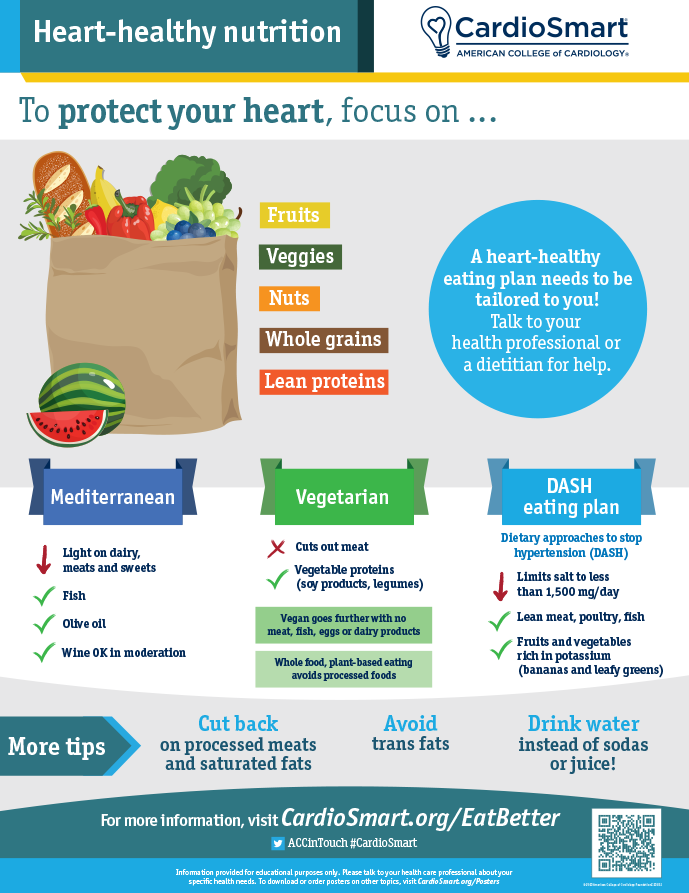
Specifically, the new guidelines include several evidence-based recommendations that emphasize a focus on whole vegetables and fruits throughout the day; incorporation of healthy fats from whole foods like meats, seafood, eggs, nuts, seeds, olives and avocados; inclusion of whole grains, while sharply reducing refined carbohydrates; limitations on alcohol and highly processed foods, added sugars and artificial additives; and drinking water and unsweetened beverages to support hydration.
According to ACC President Christopher M. Kramer, MD, FACC: "The ACC welcomes the science-based recommendations and also looks forward to providing additional evidence-based feedback regarding the impacts of high protein and high fat dairy products on heart health and opportunities for further research when updates to our 2019 Prevention Guideline are released later this year."
The guidelines also encourage individuals to eat the right amount of food, based on age, sex, size and activity level. Tailored recommendations are also provided for infants and children, adolescents, pregnant and lactating women, older adults, individuals with chronic disease, and vegetarians and vegans, ensuring nutritional adequacy across every stage of life. Specifically, individuals with chronic disease are encouraged to talk with their health care professionals on how to adapt the guidance to meet their specific needs.
"The ACC acknowledges and appreciates the release of new federal nutrition guidance and remains committed to helping clinicians and patients use it to support heart health," said Kramer. "We are closely reviewing the recommendations and encourage clinicians to discuss practical, culturally appropriate healthy eating options with their patients. Even the healthiest among us can benefit from heart healthy eating patterns. Adopting a healthy diet is especially helpful for people at risk for – or who already have – heart disease or related risk factors like high blood pressure, high cholesterol and diabetes."
Clinical Topics: Prevention
Keywords: Cardiology Magazine, ACC Publications, CM-Jan-Feb-2026, Quality Indicators, Health Care, Primary Prevention, PubMed, Health Policy
