Feature | Navigating Valve Disease
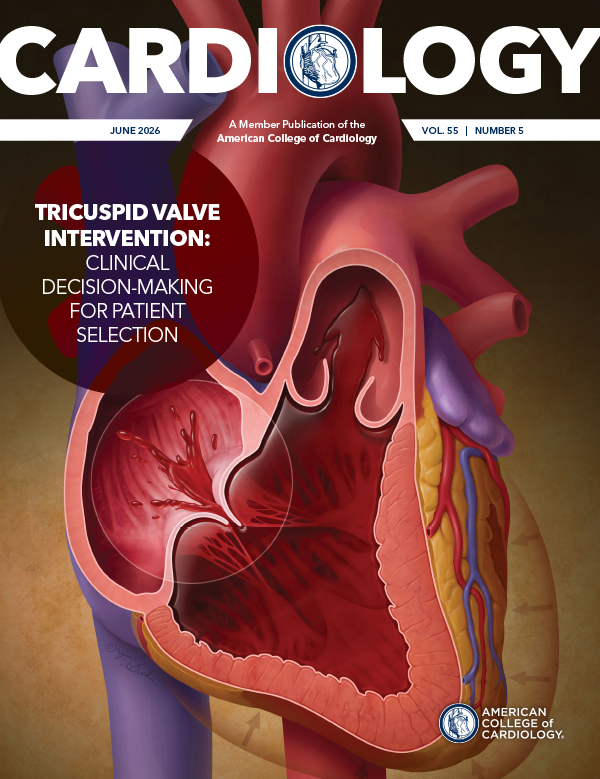
Shared decision-making has become central to the management of valve disease, including tricuspid regurgitation (TR) (see cover story) and severe aortic stenosis (AS). If done correctly, it can help clinicians engage patients and families in meaningful discussions about symptoms, prognosis, treatment burden and personal goals, ensuring care decisions align with what matters most to each individual patient.
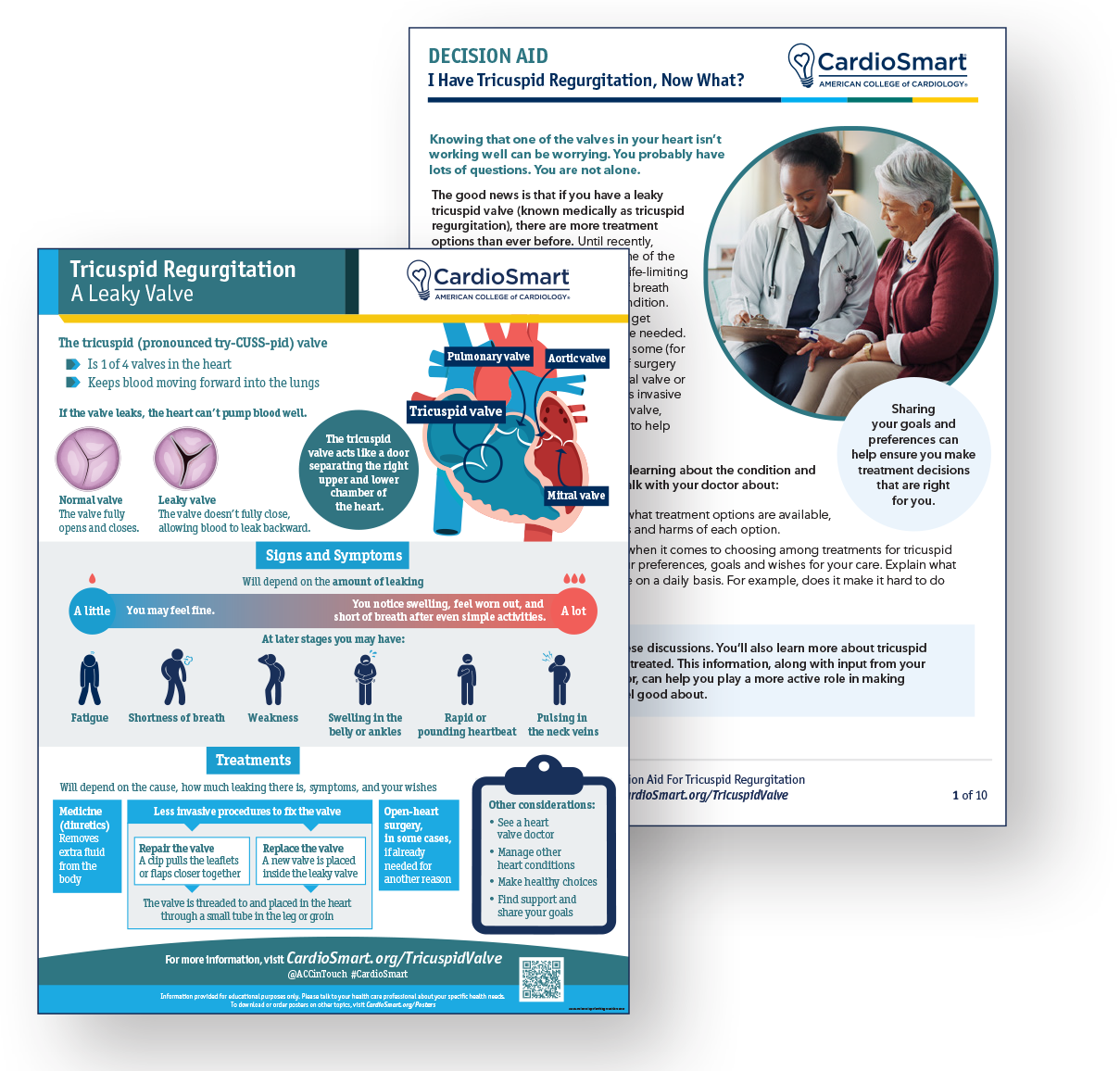
ACC CardioSmart decision aids are designed to support these conversations and help patients understand the disease and navigate complex treatment choices.
For example, for patients with TR, CardioSmart resources offer short summaries of available treatment options and lifestyle impacts along with worksheets to brainstorm questions and weigh the treatment path that works best.
When it comes to valve replacement and treating AS, for many patients, both transcatheter aortic valve replacement (TAVR) and surgical aortic valve replacement (SAVR) are clinically appropriate options. A CardioSmart discussion guide provides a side-by-side comparison of TAVR and SAVR, including who may benefit from each approach, how the procedures are performed, expected hospital stay, recovery timelines, and key risks and benefits. It also outlines common patient scenarios and includes practical discussion prompts that encourage patients to share what matters most to them.
Additional CardioSmart decision aids are available to help guide discussions with patients about the following conditions:
- Atrial Fibrillation: Considering blood thinners or left atrial appendage closure to prevent strokes
- Heart Failure: Considering medicines or devices such as an implantable cardioverter defibrillator (ICD) or left ventricular assist device (LVAD)
- ICDs: Considering whether to have an ICD placed
Advocacy in Action
Read a joint statement from the ACC, the Society for Cardiovascular Angiography & Interventions (SCAI) and Society of Thoracic Surgeons (STS), released last month in response to recent media coverage of SAVR and TAVR. According to the societies, while the coverage raised important questions about treatment options and long-term outcomes for patients with valve disease, it fell short in highlighting the collaborative, multidisciplinary nature of cardiovascular treatment, including shared decision-making with patients.
TAVR: Shared Decision-Making Beyond the Procedure
For patients undergoing TAVR, the key long-term issue is not just "how well did the procedure go?" but "what is the lifetime valve strategy from here?" This is becoming especially important for younger or lower-risk patients who may outlive the valve and need future interventions. Here are some questions worth revisiting with patients over the months and years after TAVR.
1. Exactly which valve was implanted?
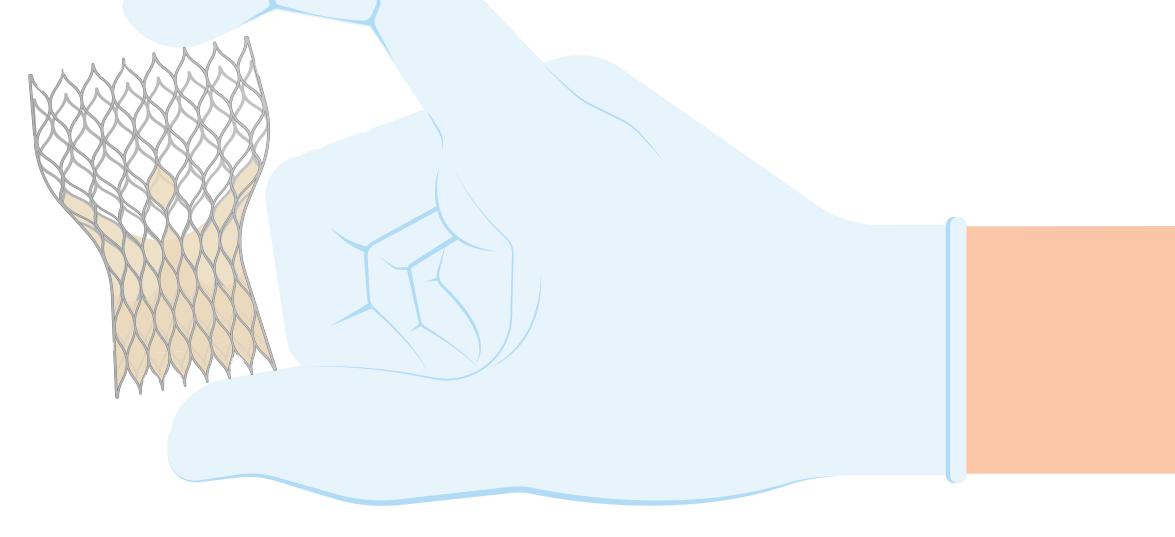
Different valve platforms have different features and patients should know manufacturer/model, valve size, balloon-expandable vs. self-expanding, etc., to support postprocedure care. This matters because a second TAVR may someday be needed. Patients should be encouraged to keep a digital copy of their valve implant card.
2. What is the plan if the valve eventually fails?
Bioprosthetic valves, including TAVR valves, eventually deteriorate. Current estimates are around 10 to 15 years, sometimes shorter. Conversations around the potential need for another valve are increasingly important, especially among younger patients.
3. What is the antiplatelet and anticoagulation strategy?
Long-term blood thinner management after TAVR continues to evolve, with current guidelines favoring aspirin alone for patients without another reason for anticoagulation. Whether patients still need aspirin, are candidates for anticoagulation, and/or their bleeding risk has changed should be discussed periodically.
4. What about exercise and managing other risks?
Long-term valve function is helped by good cardiovascular management. Clinicians and patients should regularly discuss blood pressure control, lipid management, diabetes management, appropriate exercise routines and cardiac rehabilitation, and other topics like smoking.
Clinical Topics: Cardiac Surgery, Invasive Cardiovascular Angiography and Intervention, Valvular Heart Disease, Aortic Surgery, Cardiac Surgery and VHD, Interventions and Structural Heart Disease
Keywords: Cardiology Magazine, ACC Publications, CM-Jun-2026, Tricuspid Valve Insufficiency, Transcatheter Aortic Valve Replacement, Aortic Valve Stenosis, Regurgitation
