Online Exclusive | Full Circle: Rediscovering the Heart of Quality Improvement
In my final year of residency training, I admittedly find myself constantly looking ahead to what's next. For me, this means applying to cardiology fellowship with the goal of becoming a cardiologist specializing in cardio-obstetrics and women's cardiovascular care. Along this journey, I have had the privilege of walking alongside an ACC Master, Claire S. Duvernoy, MD, MACC, who has traveled this path before me and acquired immense wisdom and insight that she graciously shares with me. We first met at an ACC Women in Cardiology event and soon she became my mentor in ACC's Internal Medicine Cardiology Program.
Over the past three years, she has listened to my interests and guided me toward experiences she knew would shape me into the physician I hope to become. When we focused on a review of my scholarly activity plans throughout residency in a meeting early on, she encouraged me to consider participating in ACC Quality Summit. Little did I know how transformative the conference would be – tying together my past, present and future, as well as deepening my sense of purpose as a physician and as my Internal Medicine Program's next Quality Improvement (QI) Chief Resident.
I was honored to be invited to present a poster at the 2025 ACC Quality Summit. At the welcome breakfast, I looked around and realized I was surrounded by hundreds of nurses – a stark contrast to my daily life in residency and my previous experiences at cardiology meetings. Before medical school, I had spent seven years as a cardiac nurse in both medical-surgical and critical care settings. Sitting among these professionals, we quickly connected through stories from the bedside. I was reminded of the deep sense of camaraderie and shared purpose that defined my early years in health care – a collective commitment to improving care for our patients.
The opening session began with a familiar reference: the Institute of Medicine's landmark report "To Err is Human." I had once lectured on its six pillars: safety, effectiveness, patient-centeredness, timeliness, efficiency and equity. But this time the message carried new weight. The keynote speaker, Donald Berwick, MD, MPP, delivered the honorary Ralph G. Brindis Lecture with a blend of history and heart. He revisited the Institute of Medicine report that he co-authored, the Triple Aim, and the origins of the quality movement. Through moving stories, one of a flash-mob symphony in Nuremberg symbolizing the collective harmony of the health care team required for great outcomes and another of his own personal loss that underscored the consequences of delayed diagnostic results, he conveyed a timeless truth: improvement is not optional; it is our moral duty.
Berwick then referenced an idea by Albert Einstein: "the right to improve and protect health implies also a duty; one must not conceal any part of what one has recognized to improve and protect health." It renewed my commitment to continually learn and strengthen my skills in QI – not as an academic exercise, but as a responsibility to the patients and families who trust us with their care. Berwick reminded us that true progress comes when every voice – nurse, data abstractor, administrator or physician is heard and valued in the pursuit of better care. This affirmed for me that QI must be taught and modeled throughout medical school, residency and fellowship, not as an optional project, but as a foundational part of professional identity.
The concept of the ACC NCDR was new to me. Thankfully, sitting behind me was Ralph Brindis, MD, MPH, MACC, former president of the ACC and a past chair of the ACC NCDR now serving as its Senior Medical Officer. He kindly shared insights on the registries' history, their role in advancing appropriate use criteria and their influence on both the U.S. Food and Drug Administration in their mission of assessing safety and effectiveness and the Centers for Medicare and Medicaid Services assurance that Medicare patients are receiving quality care. I learned that the ACC NCDR databases are more than repositories, they are living systems that allow us to learn from our collective experiences, inform our clinical practice guidelines and identify gaps and inequities in care, along with measuring the impact of improvement efforts.
Listening to nurses and registry team members describe their work at ACC Quality Summit, one theme echoed throughout: the need for physician partnership. Numerous stories were shared that their data abstraction and performance improvement efforts thrived when supported by physicians who advocated for their teams and were champions for change. I was reminded of my days at the bedside – how fulfilling it felt when my voice as a nurse was heard and valued. Now, as a physician, I experience that same fulfillment when collaboration flourishes. True leadership, I've learned, is not about authority, it is about empowering others to bring their best forward, knowing that patients' lives depend on it.
Click here to read about key findings from top-scoring abstracts from ACC Quality Summit.
The Summit reinforced that QI is not a side project. QI is the fabric of good medicine. It requires humility, teamwork and the willingness to see systems through the eyes of those who operate within them. It also revealed how registries bridge the past and future of cardiology, grounding innovation in real-world evidence. I also realized that learning to lead and advocate on behalf of your team is a critical skillset today's trainees should seek to develop.
I have learned that QI depends on shared vision and accountability, much like my guidance and mentorship from Duvernoy. Quality Summit left me both humbled and inspired to carry these lessons forward into my year as chief of QI, fellowship and beyond. During a conversation with ACC CEO Cathleen C. Gates, she remarked, "Trainees are the future of the profession and the College." Her words echoed what I had felt throughout the conference: the next generation of cardiologists must lead with collaboration, curiosity and commitment to QI.
My experience at Quality Summit reminded me why I entered medicine – to heal, to learn and to continually strive to do better for those who trust us with their care. The future of patient care lies not only in innovation, but in the power of partnership – across roles, disciplines and generations – al working together toward a shared goal: excellence for every patient, every time.
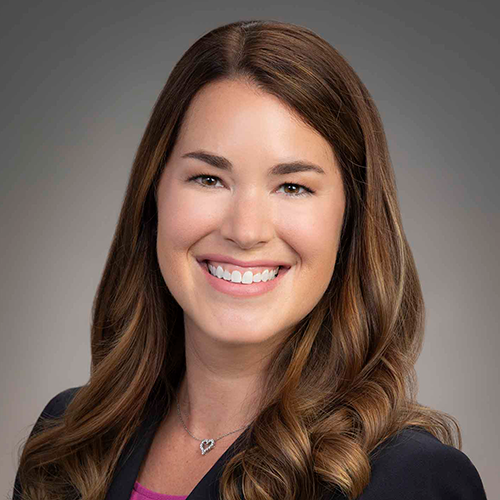
This article was authored by Lauren Spaeth, DO, a third-year internal medicine resident at Ohio Health Riverside Methodist Hospital in Columbus, where she will become the chief resident of Quality Improvement in June 2026.
Keywords: Cardiology Magazine, ACC Publications, Critical Care, Internship and Residency, Delivery of Health Care, Cardio-Obstetrics, Quality Improvement
