Quality Improvement For Institutions | Meds to Beds: Promoting Medication Adherence Post PCI

When a patient presented to Methodist Le Bonheur Healthcare (MLH)-Germantown in Tennessee with an apparent myocardial infarction, STEMI Coordinator Lynde M. Sain, MSN, RN, and Outpatient Pharmacy Manager Anyarat Anna Rikard, PharmD, BS, AACC, thought they had set him up for success post PCI.
"We had a patient where we thought we had taken care of everything for him," says Rikard. "We did the procedure right, did the meds right, and guess what? He went to the pharmacy, they didn't have the meds, and he forgot to take it." A month later, the patient was back at MLH-Germantown.
After comparing notes on what had happened, Sain and Rikard set out to make a change at their facility to tackle medication access and adherence so they could improve patient outcomes post discharge and reduce their hospital readmissions.

"We decided we would establish one goal, one process and one culture within our program," says Sain. The "Meds to Beds" program that resulted from Sain and Rikard's collaboration in addition to various other stakeholders at MLH-Germantown would end up being a critical component of their team's journey to achieving ACC's Cardiac Cath Lab Accreditation.
Recognizing a Need, Seizing an Opportunity
Together, Sain and Rikard recognized a gap in care leading to STEMI patients treated by their facility to end up back in the hospital. But MLH-Germantown is far from the only center seeing the consequences of medication nonadherence firsthand.
Anywhere from 25% to 30% of patients discharged from the hospital have poor medication adherence due to lack of transportation, high medication costs, long pharmacy wait times or issues with health literacy. More specifically, about 10% of the patient population has a disruption of dual antiplatelet therapy (DAPT) related to nonadherence. "10% is one in 10 too many," says Sain.
The Meds to Beds program at MLH-Germantown, developed by Sain and Rikard in partnership with Cath Lab Director John Signa, BS, CVT, MBA, RTR, AACC, and Cath Lab Supervisor Karen Drewery, BSN, aimed to keep medication front-of-mind from the very start with an opt-in option on the patient intake questionnaire for all PCI patients in the cath lab holding area.
Through the program, patients receive their medications before discharge along with education from a member of the pharmacy team stressing the importance of taking their medications post procedure and instructions on what to do if they have issues filling their prescriptions.
"Incorporating a team approach within our facility, we are able to provide medication education and ensure patients go home with the medications they need," Signa notes.
To address the financial barriers that often lead to lapses in medication adherence, patients in the program who were unable to afford their P2Y12 prescription received a one-month supply at no cost. Rikard explains that by improving outcomes, cost-savings would follow.
"One out of nine dollars of total health care spend waste is due to nonadherence," says Rikard. "It's not a pretty picture, but if you look at the data, one-third to two-thirds of rehospitalizations is due to somebody not taking their medication correctly."
Collaboration is Key
Addressing medication nonadherence post PCI was not a task Sain and Rikard could tackle alone. They needed to get everyone involved. Their program implementation goal was to achieve 25% participation by the fourth quarter of 2023 and 75% by the second quarter of 2024.
"We set the standard high because we knew our team could do it," says Sain. "And we believed in them."
To meet these lofty goals, they would need to align those working in the Cath Lab, the outpatient pharmacy and the outpatient cardiology clinic.
"The number of people beyond our team engaged in developing Meds to Beds was significant because it requires talking to everyone who may touch the process to ask their opinion, understand potential pitfalls and engage the providers who will use this program," says Brian J. Borkowski, MD, FACC, chief of staff at MLH-Germantown.
Working across teams required different strategies to engage each stakeholder in the process.

For the outpatient pharmacy team, that meant developing a pharmacy medication form in the electronic medical record and pharmacy system to document counseling notes and education provided through the Meds to Beds program as well as standardizing a one week follow up, calling high-risk patients to confirm they have been taking their medications as directed.
Working with both physicians and nurses centered around education and constant communication, encouraging the modification of order sets to reflect a 90-day supply of DAPT whenever appropriate and incorporating pharmacy-based questions as part of the intake form in the preprocedural holding area, among other efforts, were instrumental. Education and collaboration were also essential components of the strategy to involve Cath Lab staff.
New HF Accreditation Enhancements Coming Soon
New updates to streamline the ACC's Heart Failure (HF) Accreditation program are coming this fall. These enhancements will include new calculated measures, an approximate 40% reduction in essential components and an expansion of the Partners in Care program to include outpatient pharmacies.
Interested in learning more about these updates? Join NCDR and ACC Accreditation Services in Denver for ACC Quality Summit 2025! Learn more about the Summit.

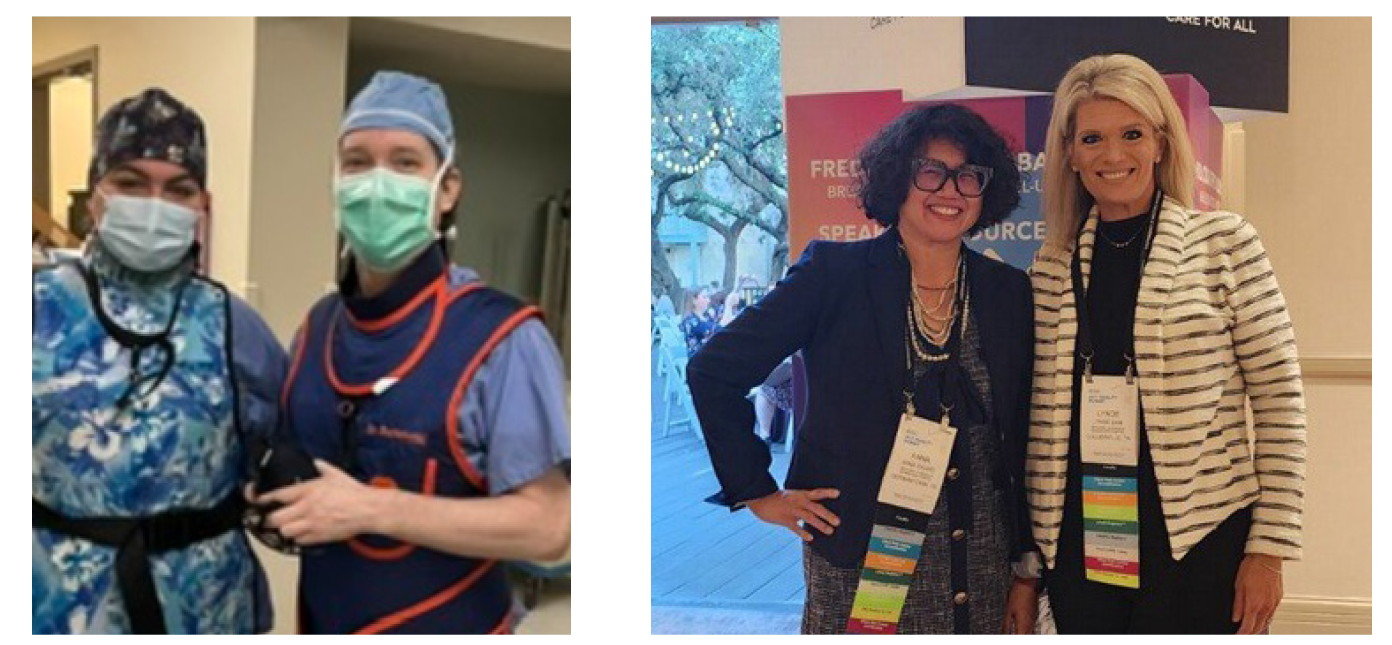
Even in the outpatient cardiology clinic, project facilitators ensured there was familiarity with the program so everyone understood the new process and its goals for the patient: to ease delivery of care and sort out potential hurdles posed by prior authorization.
"One of the things we learned through this process is we're not perfect," says Rikard. "For our Meds to Beds strategy, you have to establish a culture of care, from C-suite to the door."
More Than Just a Process
Due in large part to multidisciplinary planning, educating early and often, and emphasizing the value of these process improvements, Sain and Rikard saw significant increases in Meds to Beds utilization at their facility.
In the fourth quarter of 2023, use of the program rocketed up to 83%, far surpassing their initial goal. By the second quarter of 2024, program utilization was up to 92%. Continuing to review shifts in utilization, they explored why certain patients refused to participate to further improve the program and adjust patient education provided.
According to Sain, quality improvement (QI) is "more than just a process, it is a culture."
MLH-Germantown is a clear example of a site prioritizing a strong culture of QI, having earned several accreditations from ACC Accreditation Services including Chest Pain Center Accreditation, Electrophysiology Accreditation, Heart Failure Accreditation and the ACC's HeartCARE Center National Distinction of Excellence.
"Recognition as a center of cardiovascular excellence via the ACC HeartCARE program designation offers validation for our hard work," says Borkowski. "Our journey to improve the care of our patients and the projects we completed were based on our team's own strong desires, and the accreditation process was a byproduct of our hard work."
More recently, the work that went into the development and implementation of the Meds to Beds program led to the site's recognition with Cardiac Cath Lab Accreditation, cementing MLH-Germantown's place as a leading ACC Accreditation participant.
"Upon completion, Meds to Beds is another successful quality improvement program that improved the care of our patients by reducing the risk of stent thrombosis while improving patients' compliance with medications through education," says Borkowski.
Looking back at the success and lessons learned from this initiative, Sain has some advice for others looking to improve quality at their institutions: "Be realistic, creative and don't be scared to fail when you're implementing a new process."
ACC Accreditation: Enhancing Quality, Powering Success
Congratulations to sites that have recently earned an accreditation, designation or certification from ACC Accreditation Services. View facilities that achieved accreditation in the first quarter of 2025 on the Find Your Heart a Home website.
Clinical Topics: Invasive Cardiovascular Angiography and Intervention
Keywords: Cardiology Magazine, ACC Publications, Percutaneous Coronary Intervention, Medication Adherence, Patient Readmission, Quality Improvement
