The Pulse of ACC | New Fund Supports Trainees, New Fellows
Strength in Solidarity: New Fund Supports Trainees, New Fellows in Time of Need
A new ACC Benevolence Fund established by M. Eugene Sherman, MD, MACC, offers financial assistance to medical students, residents or fellows-in-training facing unexpected or emergency financial situations that may impact their training. Cardiology spoke to Sherman about the impetus behind the Fund, its overarching goals and his advice for current fellows and future philanthropists.
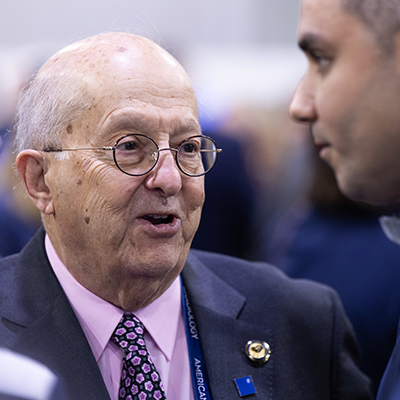
Cardiology: What inspired you to establish the Benevolence Fund?
The real motivation was seeing someone in need and probably not responding as I should have in the moment.
I met a young man from Iran named Michael when he was a resident in Annapolis, MD. Michael's unbelievable story of resilience involved fleeing Iran, living in refugee camps in Turkey and eventually making his way to Belgium and then to North America. When he went to apply for fellowships, Michael shared with me that he was struggling financially and considering selling his car to afford the application fees.
At the time, I called the College and asked if there was any kind of emergency fund to help trainees in need, but there wasn't that type of service available. I will be quite honest that I carried a lot of guilt for not writing him a check during that specific moment of need.
However, Michael's story planted the seed. While I've had other opportunities to personally help individuals in similar circumstances over the years, when I learned the College was growing its philanthropic efforts, I knew this was an opportunity to develop a permanent, sustainable way to ensure support for others like Michael down the line.
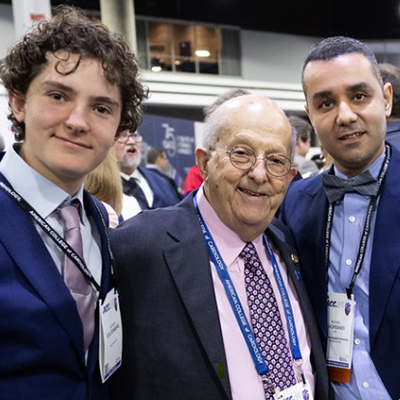
I can tell you the dollars are small compared to the satisfaction you get in watching others go on to succeed and help others. For Michael, I helped him find a fellowship in preventive cardiology at Johns Hopkins, which later turned into a general cardiology fellowship in St. Louis. Today, he is now thriving in his training and recently got married – an event my wife and I were honored to attend. We're like family now.
Cardiology: What types of needs will this fund help address?
The Benevolence Fund is intended to provide one-time financial support to individuals facing unexpected events or circumstances.
Trainees, particularly if they're young and starting a family, face a number of challenges including the costs associated with multiple application submissions and the need to travel for interviews. I never want anyone to give up on a career in medicine because they can't afford to apply to enough programs or they can't afford the process.
Longer term, I also hope that anyone who benefits from this assistance will find a way to help someone else later, whether that's giving back to the College, serving as a mentor, etc. Even if we only help one person a year and that one person goes on to a fulfilling career in cardiology – that's success.
Cardiology: Why do you think it's vital to invest in the "people behind the profession," not just science and technology?
A strong cardiovascular workforce is critical. While what motivates people to choose a career in medicine has changed since my wife and I were in medical school in the 70s, the needs of the cardiology workforce have not changed that much. We still need and want a diverse workforce that can fill the many different roles within the profession, whether that's academics, research, specialty-focused or urban or rural medicine. A diverse workforce is also one way we can correct health disparities in American health care.
I am currently working with one young man now who wants to become a cardiologist and work in a rural community because he's learned about the needs of nonurban communities through training and work experiences in rural hospitals and ERs. I badly want to find a training spot for him so he can fill that niche.
You can't transform cardiovascular care and improve heart health for all without investing in the people behind the profession and finding ways to foster and grow a workforce that serves all of our needs.
Cardiology: If you could share one piece of advice or encouragement with today's cardiology fellows, what would it be?
To understand that as difficult as training is, it is also made up of special moments where you can meet and learn from fellow trainees, mentors and professors and make lasting friends. I would tell today's fellows to take this time to develop your skills, values, ethics and professionalism and use it well.
Cardiology: What legacy do you hope to leave through this act of generosity?
Legacy is all about doing something that will carry on and inspire others. I could have done this as an anonymous gift, but I thought there was benefit of attaching my name because it might encourage others to contribute or do something similar. I would encourage others interested in giving back to the College to learn more about the opportunities available.
ACC's Global Strategy in Action
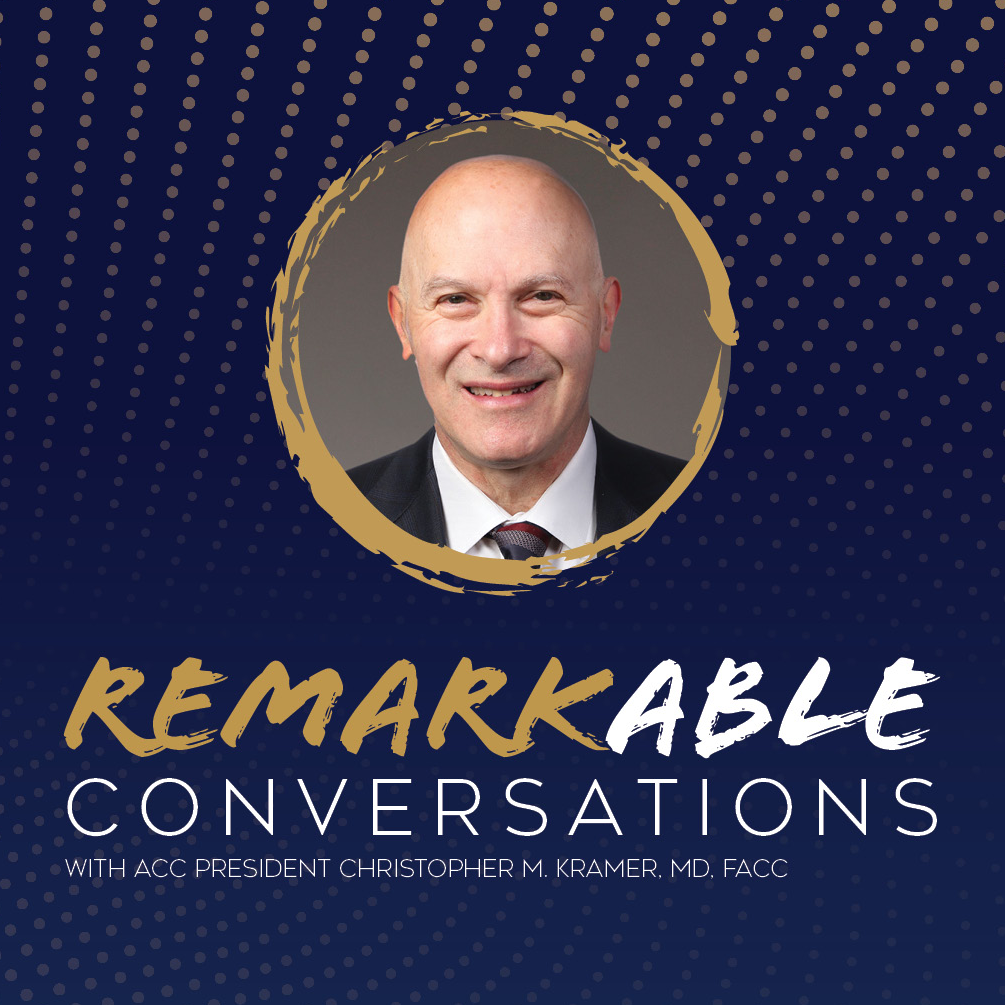
In the latest installment of the Remarkable Conversations series, ACC President Christopher Kramer, MD, FACC, was joined by ACC global leaders Dipti Itchhaporia, MD, MACC, Hani K. Najm, MD, MSc, FACC, and Benny J. Levenson, MD, PhD, FACC, for a closer look at how the College is implementing its global strategy to address cardiovascular disease through localized education, quality improvement, leadership development, research funding and global health policy.
"ACC's global strategy is not just a roadmap – it's a movement," says Kramer. "A movement rooted in partnership, cultural respect, scientific excellence and a belief that every person, in every corner of the world, deserves access to high-quality cardiovascular care."

ACC Live From ESC Congress 2025 in Madrid
The ACC will be live from ESC Congress 2025 in Madrid later this month. Check your email and tune into ACC.org for news summaries, trial updates, journal scans and daily video wrap-ups of Hotline Trials, JACC Journals simultaneous publications, new clinical guidelines and more. Plus, follow the ACC and JACC Journals on all major social media platforms for quick links to news and video coverage. Onsite in Madrid? Stop by ACC Central in the Exhibit Hall and visit the JACC Journals ESC Congress events page for opportunities to interact with editors.
Registration Is Open: Will You Be There?
Check out the following ACC U.S.-based meetings taking place throughout the fall. There's still time to register and reserve your spot!
Oct. 5-7: ACC Legislative Conference 2025
Washington, DC
Oct. 14-16: ACC Quality Summit 2025
Denver, CO
Oct. 16-18: MedAxiom CV Transforum Fall '25
Austin, TX
Oct. 17-19: Cardio-Obstetrics Essentials
Washington, DC, and Virtually
Dec. 12-14: Valentin Fuster Cardiovascular Symposium
New York, NY
Keywords: Cardiology Magazine, ACC Publications, Global Health, Education, ESC Congress, Spain, Cardiovascular Meetings
