
Cover Story | Stroke Prevention in AFib: Defining the Role of LAAO
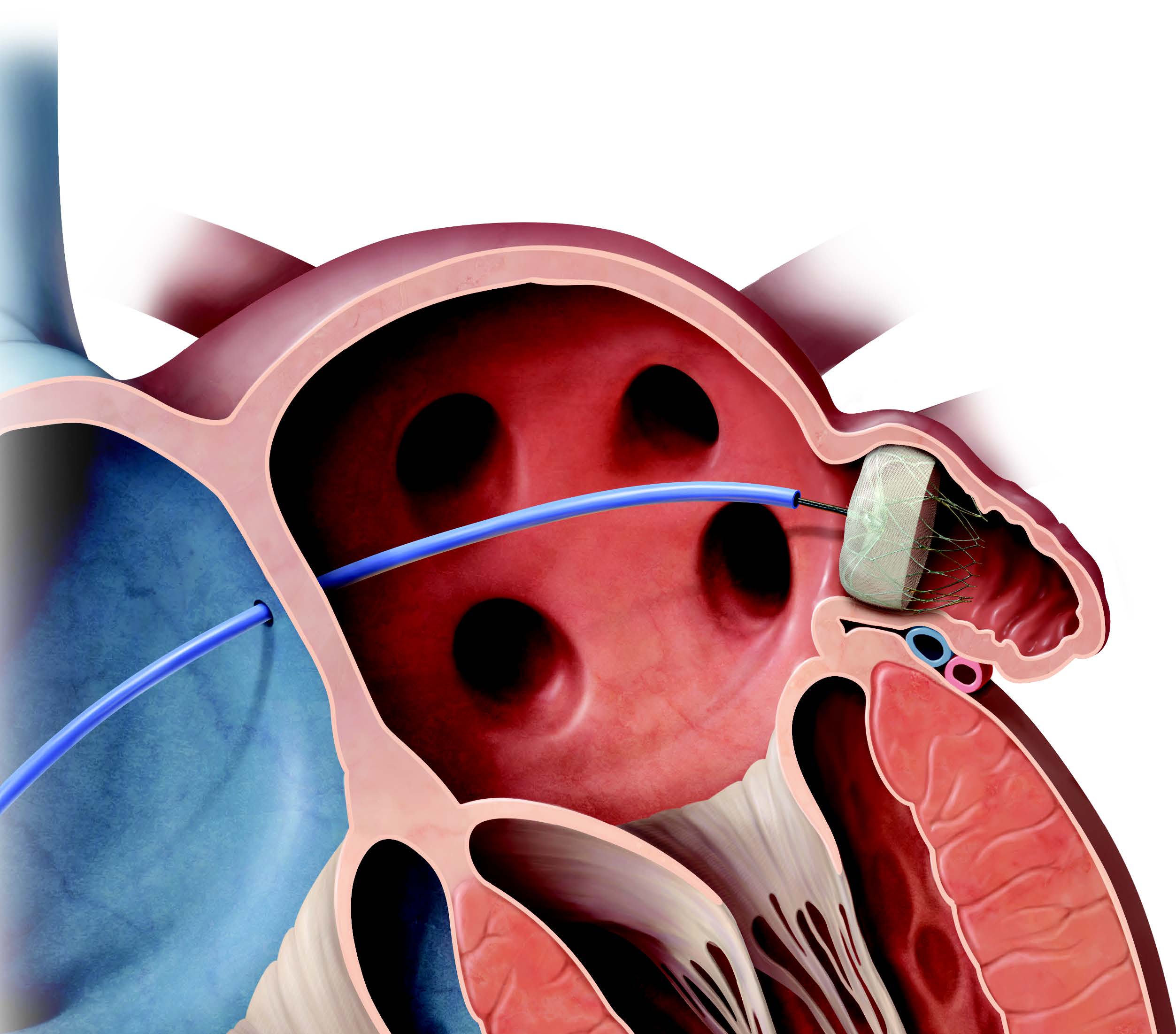
Left atrial appendage occlusion (LAAO) has become the most performed structural heart procedure in the U.S., with an estimated >700,000 procedures completed to date and volumes climbing sharply every year.
This increase is reflective of both device maturation over more than a decade and the large population of patients with atrial fibrillation (AFib) inadequately treated with anticoagulation, says James V. Freeman, MD, FACC, director of cardiac electrophysiology at Yale New Haven Health in CT.
Freeman has been instrumental in generating real-world data for ACC's NCDR LAAO Registry. Quite a lot of real-world data, in fact. The LAAO Registry captures an estimated 95-98% of all LAAO procedures performed in the U.S. and has published 38 papers reporting outcomes in the last six years alone.
For most of the decade since the first LAAO device was approved in 2015, the patients undergoing LAAO have been those, as Freeman puts it, "caught between a rock and a hard place." These are people with AFib with elevated stroke risk but for whom anticoagulation has become untenable, dangerous or simply impossible to sustain.
That population is large. According to 2020 Registry data, patients who underwent LAAO with the WATCHMAN device in the first three years of commercial use had a patient profile starkly different from the moderate-risk enrollees of early clinical trials, with a mean age of 76.6 years and a mean CHA2DS2-VASc score of 4.6.1 Most patients had relative or absolute contraindications to long-term anticoagulation, including a 69% rate of prior bleeding and a 12% rate of intracranial hemorrhage (ICH). In comparison, only 13.3% of the patients enrolled in the PROTECT-AF and PREVAIL randomized clinical trials had a prior bleeding event.
The recent CHAMPION-AF trial, presented as a late-breaking clinical trial at ACC.26, has sharpened both the promise and the limits of the field.2 The 3,000-patient randomized trial showed that WATCHMAN FLX was noninferior to nonvitamin K antagonist oral anticoagulants (NOACs) for the composite of cardiovascular death, stroke and systemic embolism (SE) at three years, while significantly reducing nonprocedural bleeding. Nonprocedure-related bleeding was seen in 11% of LAAO patients and 19% of NOAC patients, yielding a hazard ratio (HR) of 0.55 in favor of LAAO (p<0.001 for superiority).
Importantly, the trial enrolled patients suitable for either LAAO or long-term oral anticoagulation (OAC).
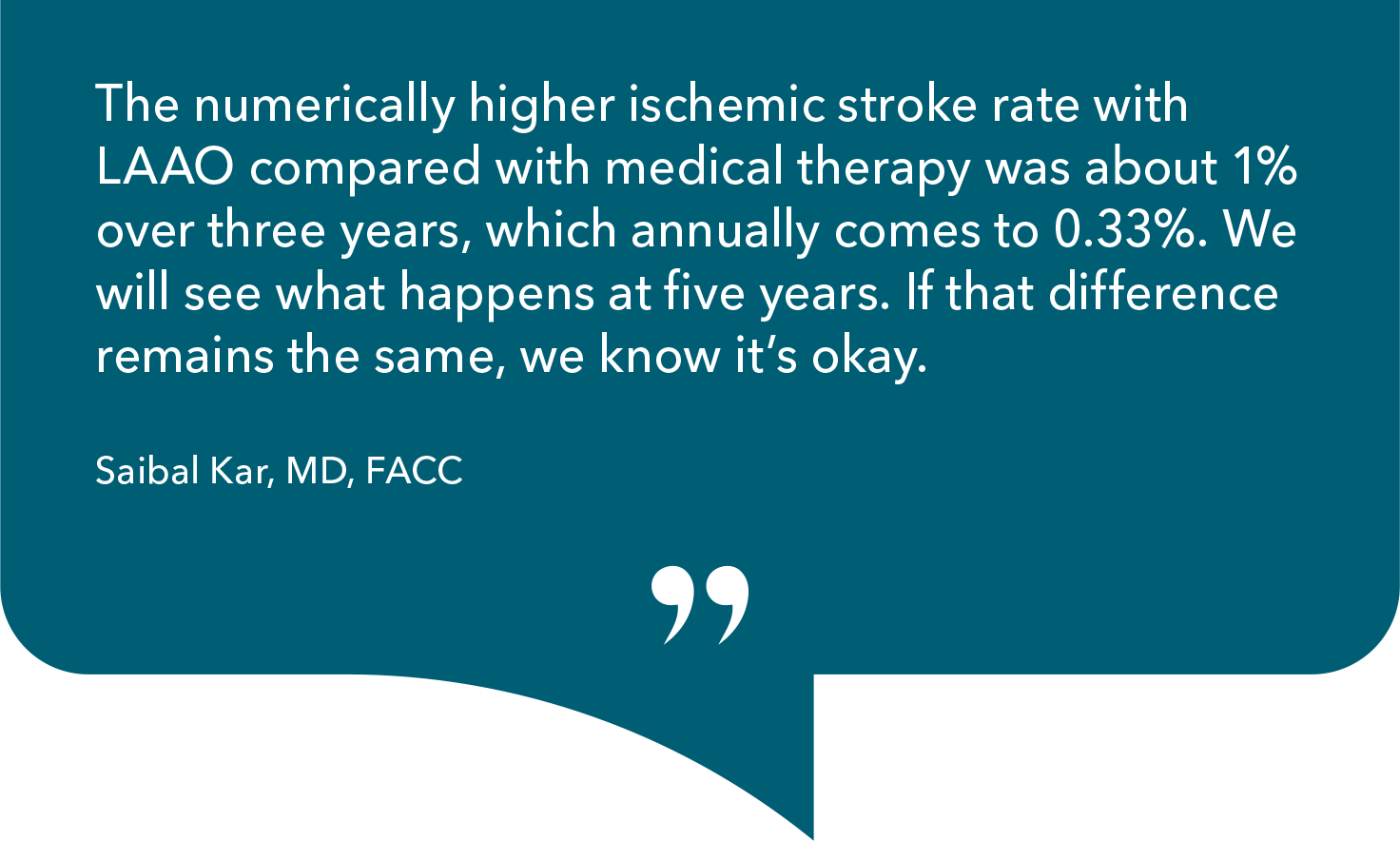
Saibal Kar, MD, FACC, of Los Robles Heart Center, Thousand Oaks, CA, who presented the CHAMPION-AF results, is careful about what that finding means, and for whom. "The numerically higher ischemic stroke rate with LAAO compared with medical therapy was about 1% over three years, which annually comes to 0.33%," he says. "We will see what happens at five years. If that difference remains the same, we know it's okay."
For patients with prior ICH or stroke that has broken through despite OAC, CHAMPION-AF is largely beside the point. "For those patients," Kar says simply, "it's a no-brainer. Those patients should almost automatically be sent for LAAO."
Freeman broadly agrees. "I think the relatively wide noninferiority margins and the higher stroke finding – albeit with a lower bleeding risk – gave some people pause about the idea of doing LAAO in just about anyone with AFib. The standard indication though, thinking about this for people who've had some problems with anticoagulation, makes a lot of sense."
Not everyone found the trial's primary result sufficient. Gregory M. Marcus, MD, FACC, (UCSF Health, San Francisco), writing in an accompanying editorial, argued that given CHAMPION-AF's industry sponsorship, the trial "needed to show convincing noninferiority" – a bar he felt it fell short of. The data, Marcus wrote, while supporting "expanding consideration of [LAAO] closure for selected patients on a case-by-case basis," were unlikely to be sufficient "for a definitive declaration that this approach is as efficacious as conventional NOAC therapy in the great majority of patients with [AFib]."3
Those concerns land alongside a separate and more sobering trial result: CLOSURE-AF, presented at AHA 2025, failed outright to demonstrate that LAAO was noninferior to physician-directed best medical care in a similarly high-risk AFib population.4
"The CHAMPION-AF trial showed a slightly higher event rate for ischemic stroke compared with direct oral anticoagulants (DOACs), and this signal was most apparent in the over-75 age group," says Jens Erik Nielsen-Kudsk, MD, DMSc, in an email exchange with Cardiology. Nielsen-Kudsk (Aarhus University Hospital, Skejby, Denmark) presented an age subgroup analysis of the CHAMPION-AF trial at EuroPCR in May 2026.
The annualized ischemic stroke and SE rates in CHAMPION-AF in the intention-to-treat analysis were 0.8% for DOACs and 1.1% for LAAO at three years. The signal was attenuated in the per-protocol analysis and further weakened when looking only at disabling strokes (0.8% vs. 0.5%).
"Adherence to DOACs was very high throughout the study (87%) and much higher than in clinical practice. The annualized stroke/SE rate of 1.1% is similar with the stroke/SE rates found in the large pivotal DOAC trials," says Nielsen-Kudsk. The prespecified analysis on stroke and SE at five years will provide more relevant data on stroke risk after LAAO.
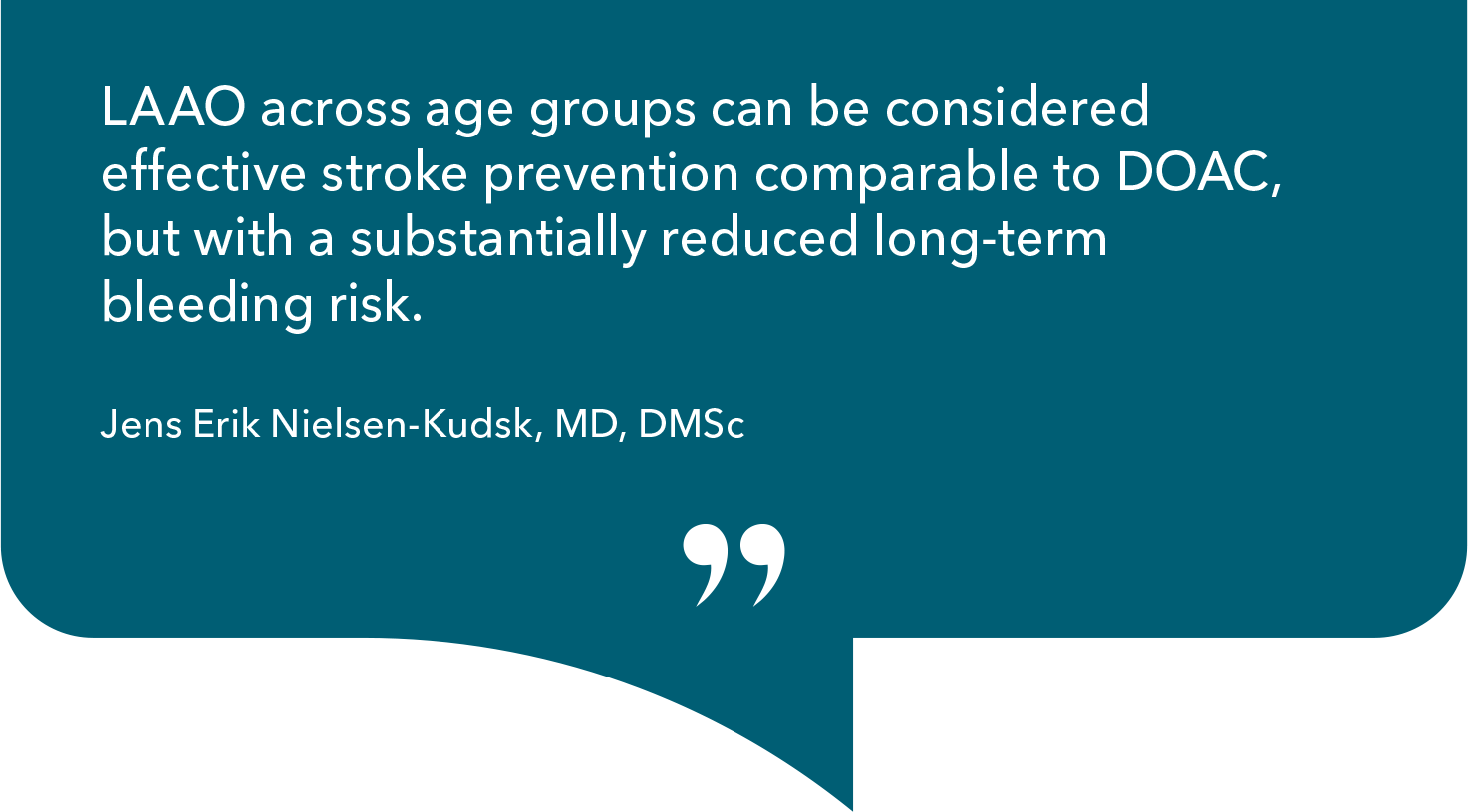
For patient counseling, Nielsen-Kudsk suggests that "LAAO across age groups can be considered effective stroke prevention comparable to DOAC, but with a substantially reduced long-term bleeding risk."
Prior ICH: When Anticoagulation Is the Enemy
Of all the circumstances that can bring an AFib patient to an LAAO discussion, prior ICH is the most compelling. The hemorrhage itself is the contraindication for resuming anticoagulation, yet doing nothing leaves the patient exposed to cardioembolic stroke. These patients are, in the most literal sense, stuck.
The NCDR LAAO Registry has helped quantify what "stuck" looks like in practice. In a recent paper published in JACC: Clinical Electrophysiology, patients with AFib with a history of ICH who underwent LAAO had a higher risk of recurrent ICH compared with those without prior ICH (HR, 3.15 vs. 1.39).5 Over a median 380-day follow-up, overall event rates were low (1.65% in those without ICH history vs. 3.56% in those with prior ICH; p<0.0001) and, as the authors noted, substantially lower than CHA2DS2-VASc-predicted rates without intervention.
A 2025 meta-analysis pooling 19 observational studies and 1,671 patients with AFib and prior ICH found that during follow-up after LAAO, ischemic stroke and transient ischemic attack occurred in 2.9% of patients and ICH in 1.9%.6 Against risk-score predictions, LAAO significantly reduced ischemic stroke risk (risk ratio [RR], 0.28; 95% CI, 0.21-0.39) and bleeding events (RR, 0.61; 95% CI, 0.44-0.84), leading the authors to conclude that LAAO is an "effective and relatively safe treatment" for AFib patients with prior ICH.
![People who bleed tend to have a higher risk for bleeding with any of these therapies, that's certainly true for intracranial hemorrhage. But the ischemic stroke risk reduction overall [with LAAO] seems to be effective.](https://www.acc.org//-/media/Non-Clinical/Images/2026/10/CARDIOLOGY/02-Cover-Quote3.png)
Freeman underscores that this group's risk profile does not normalize after LAAO. "People who bleed tend to have a higher risk for bleeding with any of these therapies," he notes. "That's certainly true for intracranial hemorrhage. But the ischemic stroke risk reduction overall seems to be effective."
The relative risk reduction with LAAO across stroke-risk profiles has held at roughly 65-70% compared with historical untreated rates, notes Freeman, even as absolute risk climbs with higher CHA2DS2-VASc scores.
The clinical implication is clear: in AFib patients with prior ICH, LAAO is not merely reasonable – it is often the most defensible path forward.
Breakthrough Stroke: When Anticoagulation Fails
Breakthrough stroke despite adequate anticoagulation is more common than appreciated. In patients who suffer an ischemic stroke despite OAC, the risk of recurrence remains high with continued anticoagulation (HR, 1.6), and switching agents offers no apparent advantage.
The 2024 STR-OAC LAAO cohort study asked directly what happens to these patients when LAAO is added.7 Pooling data from 21 international sites, investigators used propensity score matching to compare 433 patients who underwent LAAO after a thromboembolic event on OAC against 433 controls who continued OAC alone. Over two years, the annualized ischemic stroke rate was 2.8% per patient-year in the LAAO group vs. 8.9% in controls (HR, 0.33; 95% CI, 0.19-0.58). After the procedure, 67% of LAAO patients discontinued anticoagulation entirely, while 33% continued it as adjunctive therapy.
LAAO substantially reduces recurrent stroke in this population, but it does not eliminate the excess risk that comes with a prior breakthrough event. An analysis of the OCEAN-LAAC registry, published in JACC: Clinical Electrophysiology in December 2025, found that AFib patients with a history of stroke despite anticoagulation who underwent LAAO still carried a postprocedure ischemic stroke rate of 4.0%, compared with 1.6% in those without prior breakthrough stroke (HR, 2.62).8
"There's residual risk of stroke after any of these therapies," says Freeman. "That's true of DOACs, and it's true of LAAO." The goal is not erasure of risk but meaningful reduction in patients who have already demonstrated that standard therapy is insufficient.
Two ongoing randomized trials will further build the evidence base in this challenging patient subgroup. The ELAPSE trial is testing whether LAAO is superior to continuing OAC after a breakthrough stroke, a direct randomized test of the STR-OAC finding. LAAOS-4, enrolling 4,000 patients with CHA2DS2-VASc ≥4, asks whether adding LAAO to ongoing anticoagulation can reduce stroke above OAC alone, building on the LAAOS-3 finding that surgical ligation of the appendage during cardiac surgery reduced ischemic stroke rates.9 "The idea is basically to add the two together to get at that residual risk," Freeman says.
Until those trials report, the weight of current evidence supports considering LAAO after a breakthrough stroke in carefully selected patients, with the explicit acknowledgment that residual risk persists.

Closing Arguments
Looking ahead, Kar anticipates meaningful guideline evolution from CHAMPION-AF's findings. The existing Class IIa indication – for patients who can tolerate short-term but not long-term anticoagulation – should, in his view, be elevated to Class I. At the same time, a new Class IIa or IIb indication should follow for OAC-eligible patients who, after thorough informed discussion, prefer to avoid lifelong anticoagulation.
For the patients at highest risk, including those with prior ICH and breakthrough stroke, "there is no question that LAAO is an excellent option and the guideline updates are almost secondary." The evidence for LAAO in those groups does not depend on CHAMPION-AF. It existed before, and it has only strengthened, in his view.
Kar sees a further frontier opening from CHAMPION-AF: the concomitant procedure. AFib ablation and LAAO are already increasingly performed together in the U.S. and Kar describes the volume as "rising further." The rationale is straightforward: ablation reduces AFib burden and addresses the arrhythmia; LAAO closes the appendage and addresses the embolic source. "The best stroke reduction was in the patients who closed the appendage off and also treated the AFib," he says. In addition, LAAO should and can be performed concomitantly with other transseptal structural heart procedures such as transcatheter mitral valve repair. "I think that's where the field is going now."
Shared Decision-Making in LAAO: What the Data Say – and What They Can't Say

"Shared decision-making is foundationally important to the decision to undergo any procedure," says James V. Freeman, MD, FACC. "This is definitely one of those procedures in which it's really, really important to talk through the data in a very nuanced way with patients in order to really understand what their goals are for their care and in life – and then to make a decision together based on the data."
That nuance matters because the data, while increasingly robust, cannot do the work of the conversation. A patient who has had an ICH on anticoagulation may have a visceral and entirely rational fear of blood thinners that shapes how she weighs a small procedural risk against a reduction in long-term bleeding exposure. Another patient may find the idea of any invasive procedure more frightening than a daily pill. The clinician's job is to understand which patient is in the room.
The reimbursement framework for LAAO from the Centers for Medicare and Medicaid Services requires documentation of shared decision-making (SDM) with Medicare patients – reflecting the procedure's clinical complexity, as well as the stakes of getting the conversation wrong.
What should the conversation cover? Freeman identifies several domains as nonnegotiable: how serious the patient's prior bleeding has been, their stroke risk, and how the patient weighs those competing concerns. Patients with prior ICH often arrive already decided, their fear of a recurrent brain bleed overriding any hesitation about the procedure. For others, the calculus is more open.
Saibal Kar, MD, FACC, frames the procedural trade-off in terms patients can act on. "LAAO is one time for a lifetime," he says. "Blood thinners need to be continuous and uninterrupted to have their true benefits." Interruptions – whether for surgery, after a fall, in anticipation of an upcoming ski trip or because of cost concerns – represent moments of stroke exposure that a procedure can eliminate.
Conversely, the procedure itself carries upfront risk (roughly 1% total complications in CHAMPION-AF) and, for those at highest risk, a small but real residual risk of ischemic stroke that patients should understand going in.
Current guidelines require LAAO candidates to be able to tolerate at least short-term anticoagulation for postprocedural management. Beyond that floor, the ideal candidate is a patient who understands what LAAO can and cannot do, and who has had a real conversation about both with their care providers.
Kar offers a framework that cuts through the complexity for clinical practice. "I make it very simple," he says. "Who should have a WATCHMAN? Three categories: those who should not take blood thinners, those who cannot take anticoagulation, for example, because they're on cancer therapy, and those who will not take long-term blood thinners."
The first two categories – should not and cannot – define the core population that has driven LAAO adoption over the past decade, and they include patients with prior ICH and breakthrough stroke. The "will not" category, newly supported by CHAMPION-AF, is where shared decision-making becomes the primary clinical tool.
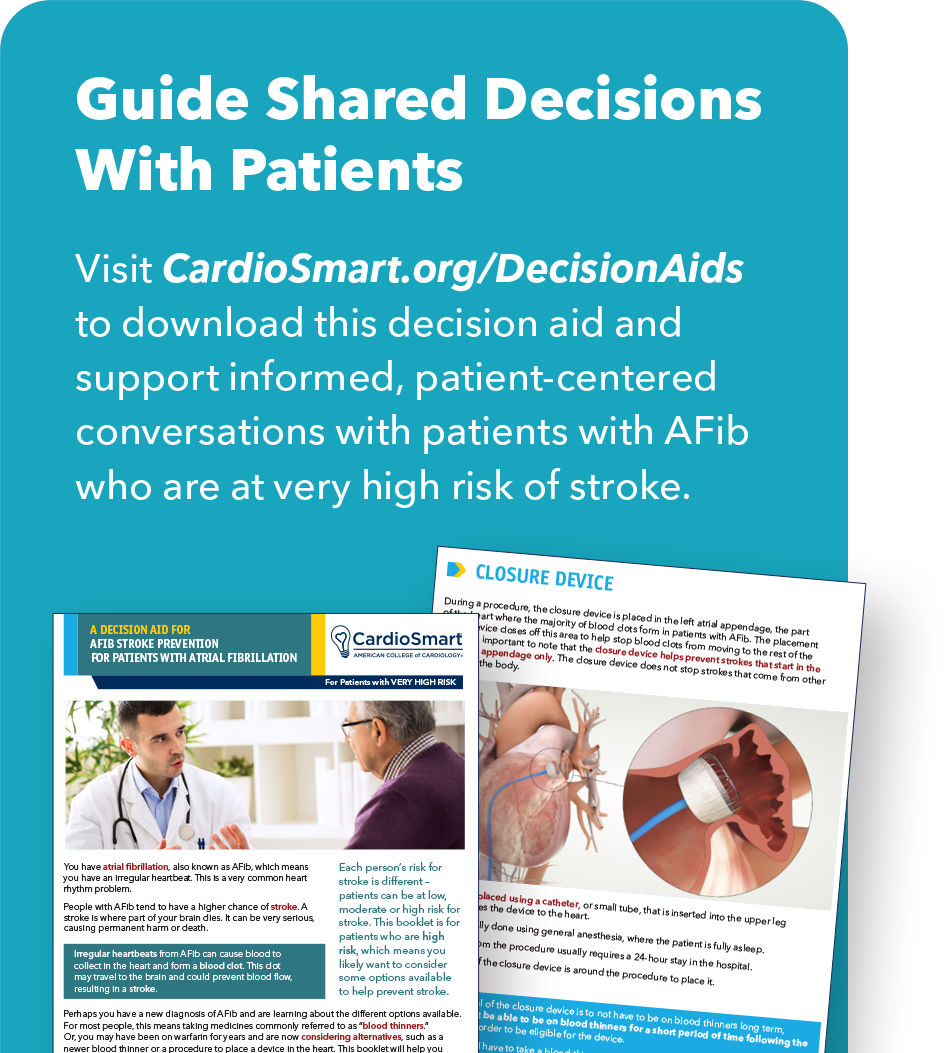
Clinicians should discuss the following with every patient before recommending LAAO:10
- Severity and type of prior bleeding (ICH, GI, other)
- Bleeding risk on continued anticoagulation (HAS-BLED score, comorbidities)
- Stroke risk profile (CHA2DS2-VASc score, prior stroke or TIA history)
- History of anticoagulation nonadherence or discontinuation
- Patient preference regarding long-term medication vs. one-time procedure
- Postprocedural antithrombotic regimen and its implications
- Residual stroke risk after LAAO (not zero, but substantially reduced)
- Procedural risk profile at the performing center
This article was authored by Debra L. Beck, MSc.
References
- Freeman JV, Varosy P, Price MJ, et al. The NCDR left atrial appendage occlusion registry. JACC. 2020;75:1503–1518.
- Doshi SK, Kar S, Nair DG, et al. Left atrial appendage closure or anticoagulation for atrial fibrillation. N Engl J Med. 2026;394:2083-2094.
- Marcus GM. Left atrial appendage closure--should recommendations be expanded? N Engl J Med. 2026;394:2156-2157.
- Landmesser U, Skurk C, Kirchhof P, et al. Left atrial appendage closure or medical therapy in atrial fibrillation. N Engl J Med. 2026;394:1270-1280.
- Mansour MC, Novack V, Freeman JV, et al. Left atrial appendage occlusion in patients with prior intracranial hemorrhage. JACC Clin Electrophysiol. 2025;11:2729-2741.
- Hammad A, Ahmad A, Khalid N, et al. Efficacy and safety of left atrial appendage occlusion for atrial fibrillation in patients with a history of prior intracranial hemorrhage: a systematic review and meta-analysis of observational studies. J Interv Card Electrophysiol. 2026;69:285-295.
- Maarse M, Seiffge DJ, Werring DJ, et al. Left atrial appendage occlusion vs standard of care after ischemic stroke despite anticoagulation. JAMA Neurol. 2024;81:1150-1158.
- Fukushima T, Fukunaga M, Isotani A, et al. Left atrial appendage closure for patients with a history of ischemic stroke despite oral anticoagulant. JACC Clin Electrophysiol. 2025;11:2715-2728.
- Whitlock RP, Belley-Cote EP, Paparella D, et al. Left atrial appendage occlusion during cardiac surgery to prevent stroke. N Engl J Med. 2021;384:2081-2091.
- Rager JB, Huang C-Y, Zimmerman S, et al. Shared decision-making and patient decision aids for percutaneous left atrial appendage occlusion. JAMA Netw Open. 2026;9(2):e2556937.
Clinical Topics: Arrhythmias and Clinical EP, Implantable Devices, SCD/Ventricular Arrhythmias, Atrial Fibrillation/Supraventricular Arrhythmias
Keywords: Cardiology Magazine, ACC Publications, CM-Oct-2026, Atrial Fibrillation, Atrial Appendage, Atrial Function, Left, Coronary Occlusion, Electrophysiology, Anticoagulation Management, Stroke
