Feature | Heartfelt Lessons: Teaching and Mentoring Tomorrow's Cardiologist

What makes a great teacher? A great mentor? And what is the difference between the two? We asked four recognized leaders in cardiovascular education and mentorship to reflect on these and other questions and share their tips for achieving success. All spoke of the joy that teaching and mentoring bring and shared how deeply rewarding it is to support the next generation of cardiovascular clinicians in reaching their greatest potential.
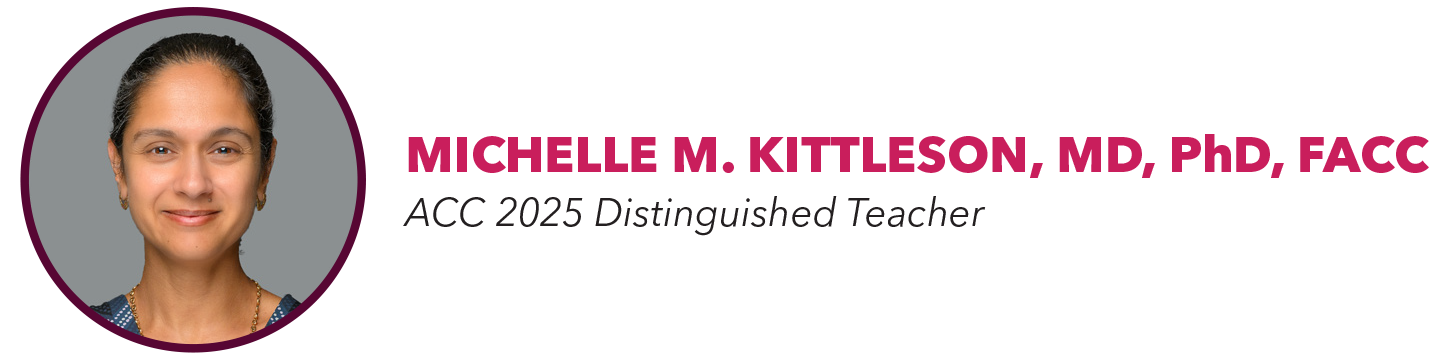
For Kittleson, director of education in heart failure and transplantation at the Smidt Heart Institute at Cedars-Sinai in Los Angeles, the art of teaching stems from a deeply personal understanding of what it means to struggle as a trainee. "I remember how exhausting it is to be a trainee, not just in the sense that you're working for many, many hours. But that emotional exhaustion of uncertainty, of just not knowing, not having experience," she says.
This empathy drives her teaching philosophy, which centers on helping others learn from her mistakes rather than making their own. "I have strong opinions on just about everything, but I have a reason for those strong opinions. So, challenge me," she tells trainees. "Ask me, 'Why did you say it has to be Lasix 20 mg an hour?' and I'll tell you why. It's probably because there was a time I didn't do that and learned from that how I did it wrong."
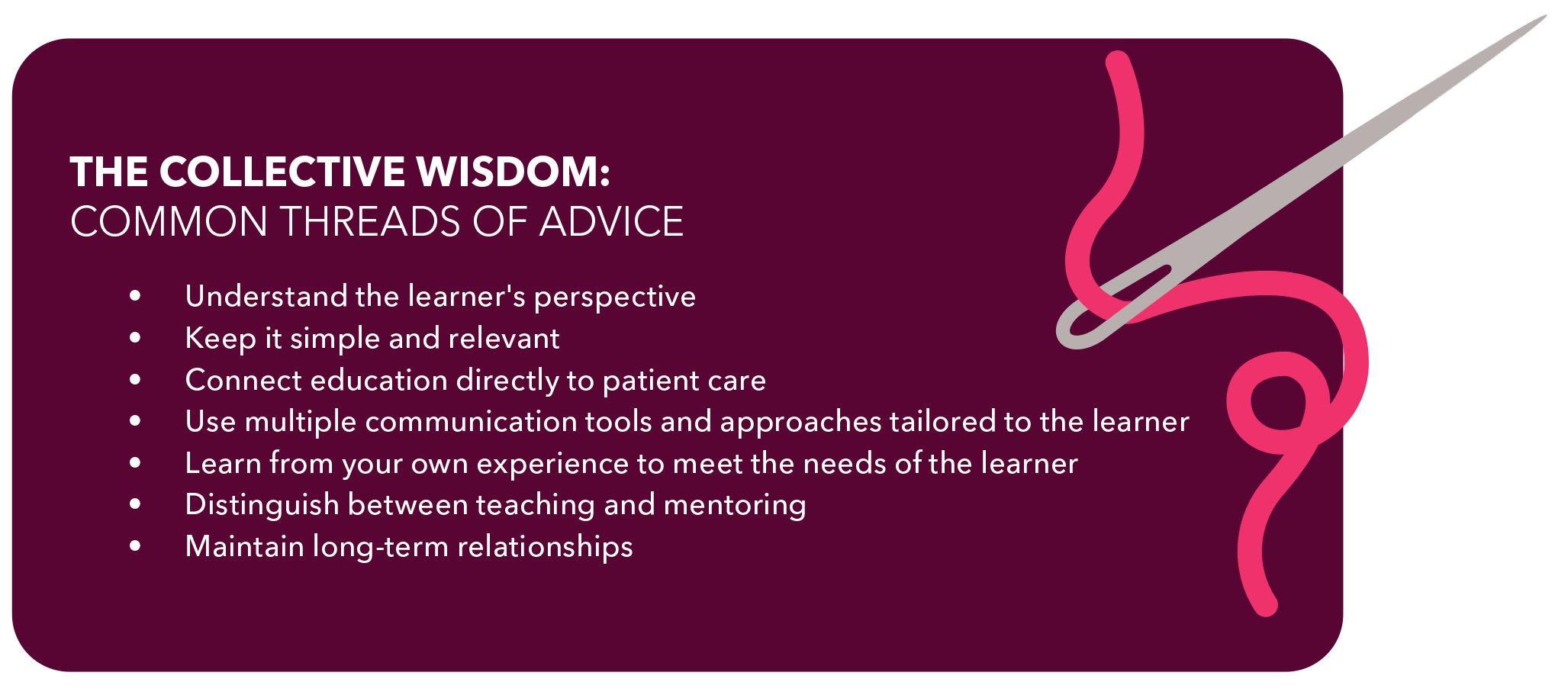
Kittleson considers herself an educator and a mentor yet draws a clear distinction between the two. A mentor, she says, is a role model for someone you want to be like someday, while an educator has a narrower focus on teaching specific skills.
Both can be the same person. She recalls one of her most important mentors and teachers who warned her about the challenges of the clinician educator vs. research track 20 years ago. Although he was a clinician educator, he encouraged her to give research a chance, which she pursued during residency and fellowship. Today, she says, "I'm at peace knowing I've really given it a good shot at both."

Kittleson's advice to aspiring educators is twofold: remember what made learning difficult during your own training and don't be afraid to tell trainees what they need to hear rather than what they want to hear, "because lives are at stake." She also brings every teaching moment back to patient care, asking trainees: "Let's imagine it was your loved one. What's the best way we should handle this situation?"
One of her greatest accomplishments in the realm of education is her 2022 book, Mastering the Art of Patient Care. It grew organically from her X (then Twitter) presence as #kittlesonrules, when she posted daily clinical pearls. Another cardiologist suggested she write a book with her "rules" before someone else did.
So much of medicine, she says, seems to be "total blind luck." And it shouldn't be. I hope that by writing this book it democratizes the value of outstanding mentors by allowing me to share this experience so everyone can have the incredible advantages I've had through my outstanding training and mentors."
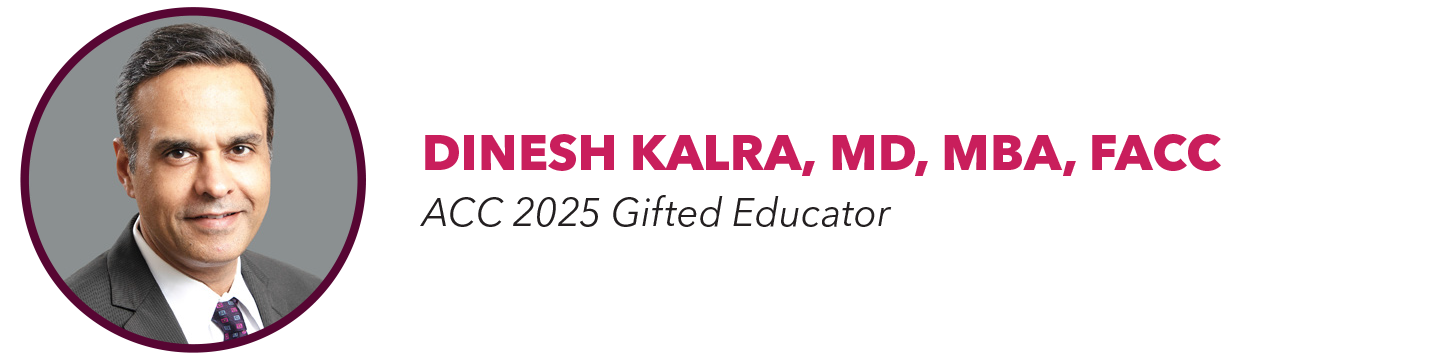
Kalra's approach to exceptional education begins with a fundamental principle: understand your audience. "The key to being an effective educator is to put yourself in the shoes of the people who are learning from you," says Kalra, chief of cardiovascular medicine at the University of Louisville School of Medicine. Whether he's speaking to a first-year medical student or a structural heart fellow, he adjusts his approach by stepping into the learner's mindset. "What would I want to know at that stage of my career?" he asks himself. "Once you get down to their level you impart knowledge in a different way."
He constantly adjusts his approach, including his tone and the information conveyed, based on where the learner is at that moment. "How are they thinking? How are they attacking the problem? What challenges are they having?"
His teaching philosophy centers on three core principles. First, make the complex accessible. "Keep it simple," he says, by focusing on just two or three main concepts. Second, use effective communication tools. This includes mnemonics, patient cases and storytelling. "Human beings love stories," he adds. "If you make it logical and understandable for them, they're more likely to remember it."
Third, make it relevant. "I try to put it in the context of 'this is what my patient needs,'" ensuring lessons remain clinically applicable rather than purely academic.

But don't forget interactivity. "You get into it with them like you're a team. You don't pretend to be the most knowledgeable one in the group." He recalls teaching first-year students about EKGs. Instead of just lecturing, he brought students to the whiteboard to draw waveforms and interpret them in real time. "You immerse yourself with them in the learning process when you see that quizzical look on their face. That's an effective way of teaching."
Kalra gets as much as he gives from teaching, he says. "You improve your own education because you never learn something as thoroughly as when you have to explain it to somebody else."
"The apprenticeship and teacher relationship is so sacred," he adds. "I feel like that's how you build the next generation of innovators and scientists and geniuses who are going to win Nobel prizes."
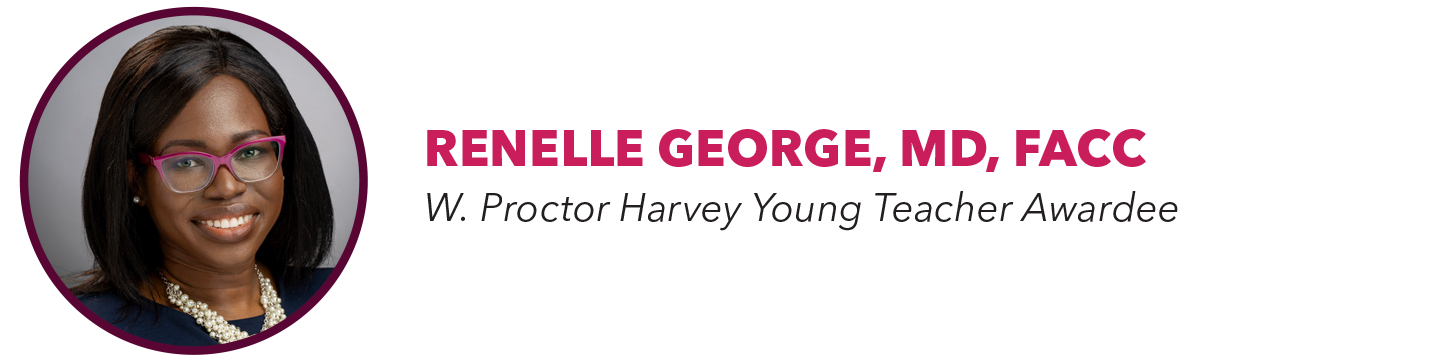
From her childhood in Trinidad and Tobago, where both parents were teachers, to her current role as a pediatric interventional cardiologist at Nemours Children's Health in Wilmington, DE, George has always understood that effective education requires more than passive absorption of knowledge. "Teaching is an active learning process," she says. In other words, "the time of passively listening to a lecture" is over.
George was drawn to academia by the knowledge that medicine was hard and that a dedicated system of teaching was needed, similar to the case-based approach used by her residency advisor. When she finished her training, her advisor gave her all his cases and she's been using them to train her own residents ever since. "It felt like getting a gift from your grandfather," she says.
Her teaching philosophy centers on engagement. "How can I engage a learner to always become active during the process of learning?" she asks. Even during lectures, she stops to ask questions, understanding the goal is to build blocks of knowledge. "If you don't get the first layer, then you're not going to get the second one and then you're going to get to layer five and totally lost."
George is the creator behind Angio Atlas (AngioAtlas.org), an online teaching tool born from her own humiliating first day in the catheterization lab when she couldn't interpret an angiogram. Today, the website provides learners with interactive, visual cases to teach them about angiograms, whatever their career stage.

The platform has exceeded her expectations evolving from a "cheat sheet for fellows" into a tool for informed consent with families and education for nurses transitioning from adult to pediatric labs.
She is now focused on developing simulation-based learning for the pediatric catheterization lab given that many of today's procedures on the very sick premature neonates she sees are too complex for traditional apprenticeship models. "Pilots do simulations before they go up there in a plane; we should have the same thing."
The ACC award means so much to her, she says, because for so long the field focused on science and research. But education is "a crucial and critical area we need to pay attention to because things are getting more complex," requiring sophisticated thoughts and requiring well trained people.
To that end, she encourages her colleagues in academia to take responsibility for trainees. "It's definitely very difficult. We're busy clinically, we're busy with research. But if there's some way to carve out a chunk of time to try and take care of the next generation, it will pay dividends."
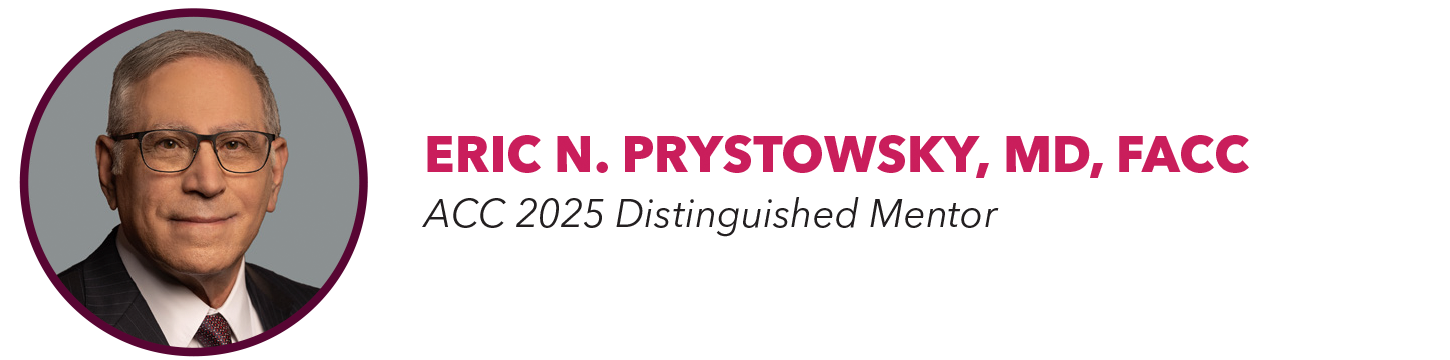
With more than 45 years in academic medicine, a curriculum vitae dozens of pages long, leadership positions in nearly every area of cardiovascular medicine, and hundreds of mentees, no one would blame Prystowsky, who directs the cardiac arrhythmia service at Ascension St. Vincent Hospital in Indianapolis, for saying "enough," and sending mentees to someone else. But then, he wouldn't be who he is or who his parents, both doctors, taught him to be.
When he was growing up, dinner-table discussions focused not on what you could earn as a physician "but about the nobility of taking care of people." That foundation led him to mentor not for prestige or obligation, but for the joy of giving back. "The personal gain for me is the smile on my face and the satisfaction I get when I see them succeed."
Mentoring differs from teaching, says Prystowsky. "Educators want you to become more learned. A mentor is there to make you a better person and to improve your life. It's basically a surrogate parent in many ways."
Sometimes you don't even realize you've mentored someone until years later. Like the prominent electrophysiologist who thanked him during his celebration dinner, noting she switched to her current specialty after a single 45-minute conversation with him during a course break years earlier. Prystowsky had no idea, but it epitomizes his mentoring philosophy. "You influence people in ways you don't realize just by being available; just by being willing to talk to them."

He's there not just for career support; Prystowsky has mentored people through divorces and other difficult times in their lives. "The most important thing is caring," he says. "You have to really have the desire to help someone."
His approach involves being consistently available and non-judgmental. "Being available when they need you, as long as the time permits," he says, noting that mentorship is "typically an intermittent process." He receives calls from former trainees years later when they're considering career changes. "I haven't spoken to them in years but that doesn't mean I'm not their mentor."
His mentorship model is deliberately one-directional. "When you're a mentor, it's a one-way street." When someone asks for advice and help, you then ask yourself if you're willing to give time to a project that has no personal gain.
He worries that too often the answer to that question is "no" given the demands of today's health care system. "People are too busy," he says. "RVUs and reimbursements. Mentoring becomes something you do if you have any time left." Yet he insists it's vital: "This is part of my world, to be a mentor."
Support. Develop. Lead.
Did you know the ACC offers a range of Leadership Development programs designed to empower the next generation of cardiovascular educators, mentors, leaders and scientists? Explore these opportunities, and visit ACC.org/Support to learn how your gift to the ACC Foundation can help grow and sustain these mission-critical initiatives.
Clinical Topics: Cardiovascular Care Team
Keywords: Cardiology Magazine, ACC Publications, Fellowships and Scholarships, Mentoring, Patient Care
