From the Member Sections | Academic Cardiology at a Crossroads: The Cost of Doing More With Less
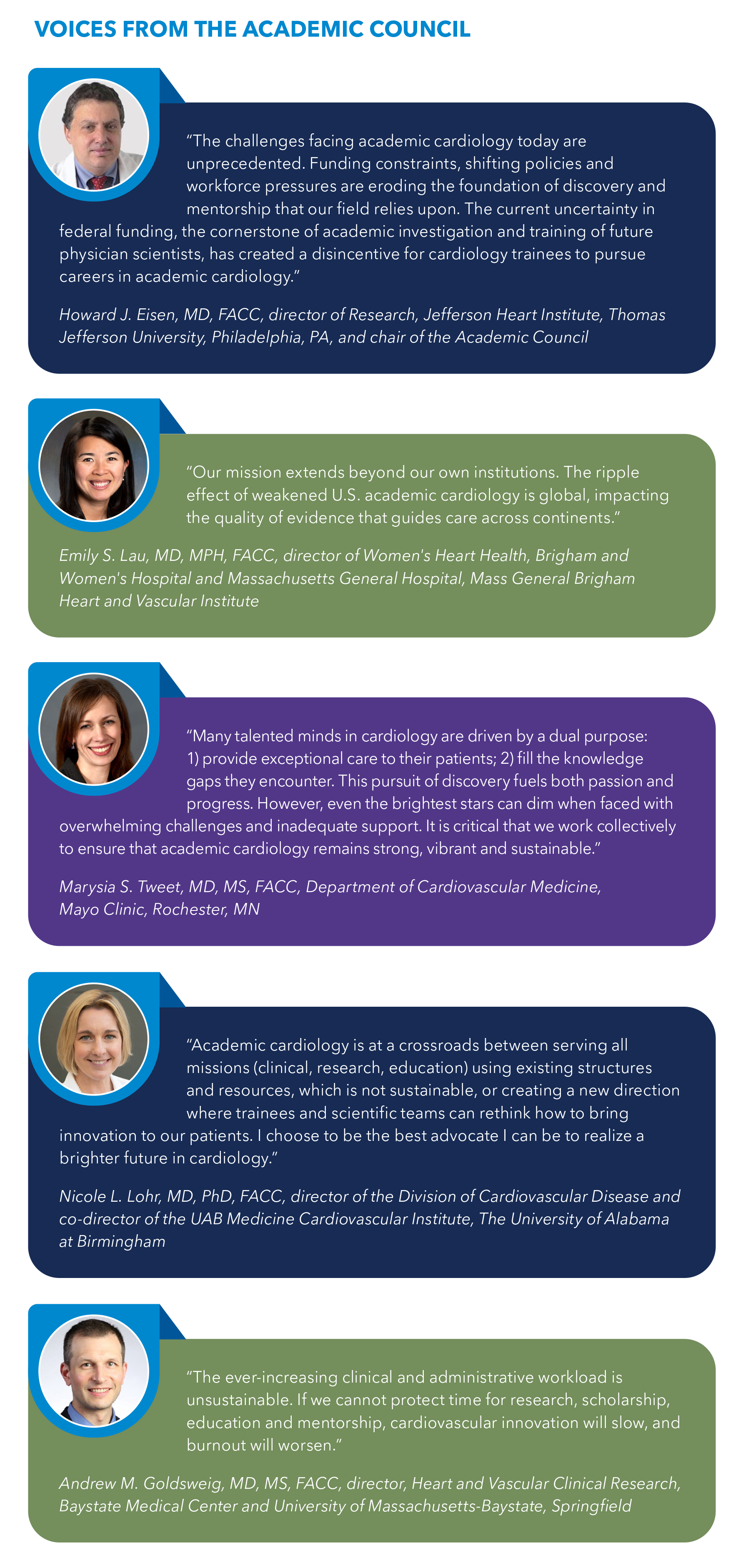
Academic cardiology has always been the beating heart of our profession – driving innovation, shaping guidelines, mentoring the next generation and providing the evidence that informs global cardiovascular care. But today, that heart is under strain.
For years, cardiovascular research funding has been shrinking as a proportion of overall federal support. Despite cardiovascular disease remaining the leading cause of death globally, funding for oncology and other specialties has outpaced ours, leaving many high-impact cardiovascular research questions unanswered. At the same time, young clinician-scientists face dwindling opportunities, disheartening pay gaps and increasing administrative burdens – all of which undermine morale and threaten the pipeline of academic leaders.
The New Law: A Blow to Morale and Momentum
Recent legislation has compounded these challenges. Policies that tighten political control over scientific panels, slow grant approvals and restrict the scope of federally funded research have sent shockwaves through academic medicine. These changes not only undermine the autonomy and integrity of scientific work but also create a chilling effect: researchers spend more time navigating bureaucracy and less time innovating.
Trainees and junior faculty – already balancing the demands of clinical care, research and teaching – are particularly vulnerable. Many report feeling demoralized and are opting for private practice instead of academia, citing lack of funding, mentorship and stability. Even aspiring health care providers are feeling the ripple effects. A neighbor recently confided in me his hesitation to apply to medical school after hearing about the loss of financial support for training and research opportunities. He is worried that his dream of contributing to medicine would be hampered by mounting debt and fewer opportunities to engage in meaningful academic work.
A Hidden Casualty: Advanced Practice Providers
One underappreciated consequence of these funding and policy shifts is the impact on Advanced Practice Registered Nurses (APRNs) and other advanced practice providers (APPs) in academic cardiology. As resources dwindle and fewer cardiologists remain in academic roles, APRNs are increasingly called upon to fill gaps in access to care
In many institutions, APRNs now spend upward of 90% of their time on clinical duties, with only a fraction of their schedule left for teaching, scholarship and program development – roles that are essential to sustaining a vibrant academic mission. This imbalance not only limits professional growth for APRNs but also weakens their ability to contribute to research and education, perpetuating the erosion of the academic enterprise.
In my own experience working as an APRN in a state institution, I have already felt the impact of these policies firsthand – with an ever-growing clinical load and shrinking opportunities for academic work. The burnout among APRNs is palpable and rising, as many struggle to keep pace while watching their academic aspirations pushed farther out of reach. At the same time, I have seen many young cardiologists leave academia altogether – either for private practice or for better-funded research opportunities elsewhere, further straining the workforce and leaving remaining providers to shoulder an unsustainable burden.
The relentless clinical load, compounded by dwindling support and fewer colleagues to share the burden, contributes to rising rates of burnout among both physicians and APPs. When the academic workforce is stretched thin, patients ultimately bear the cost, through longer wait times, less innovation and fewer opportunities to participate in cutting-edge trials.
National and International Consequences
The decline in U.S. academic cardiology reverberates far beyond our borders. U.S.-led trials, guidelines and educational programs have shaped cardiovascular care worldwide for decades. As funding shrinks and leadership wanes, global collaborations suffer, and other nations may fill the void – often with different priorities or standards. The result could be a more fragmented and less equitable landscape for cardiovascular care and discovery.
A Call to Action
The good news? This trajectory is not inevitable. Together, we can advocate for policies and investments that revitalize academic cardiology and preserve its global leadership. To do so, we must:
- Urge policymakers to increase and protect cardiovascular research funding.
- Defend the independence of scientific panels and peer-review processes.
- Streamline administrative processes that hinder progress.
- Support early-career investigators and APRNs with mentorship, funding and career development opportunities.
- Strengthen international partnerships to ensure that discoveries benefit everyone.
Doing More With Less: At What Cost?
Academic cardiology has given the world life-saving innovations, from statins and stents to transcatheter valves and beyond. The next generation of breakthroughs depends on our collective resolve to protect the people and programs that make discovery possible.
We owe it to our patients, our profession and the world to ensure that academic cardiology does not remain at a crossroads, but finds a path forward, one where we no longer have to do more with less.
Advocacy at ACC
Academic cardiology, together with the entire house of cardiology, plays a vital role in shaping health policies that support clinicians and protect patient access to high-quality care. The collective voice of cardiovascular professionals is essential to driving meaningful change on Capitol Hill and beyond. Learn more about how you can get involved in ACC's Advocacy efforts at ACC.org/Advocacy. Plus, turn to page 30 for a closer look at current advocacy priorities and key "asks."
Work With Us
Academic cardiology is at an inflection point. As pressures mount, the burden on physicians, trainees and APPs continues to grow. The stakes are not only professional, but also profoundly personal, as burnout rises and the promise of future innovation hangs in the balance.
Your voice is vital in shaping the future of our field. Join the ongoing discussions, share your perspectives, and learn more about how you can contribute to the College and the Section by visiting our home page and join the DocMatter Academic Cardiology Forum too. Get started.


This article was authored by Simona Campa-Cochrane, DNP, APRN, a Doctor of Nursing Practice in the Division of Cardiology at UT Southwestern Medical Center in Dallas, Texas. She serves on the Academic Cardiology Section Leadership Council.
Clinical Topics: Cardiovascular Care Team
Keywords: Cardiology Magazine, ACC Publications, Academic Medical Centers, Schools, Medical, Mentoring
